NESCO NPC-9 Review: Cost Per Meal + Real Tests
By Lina Ortega • 15th Feb
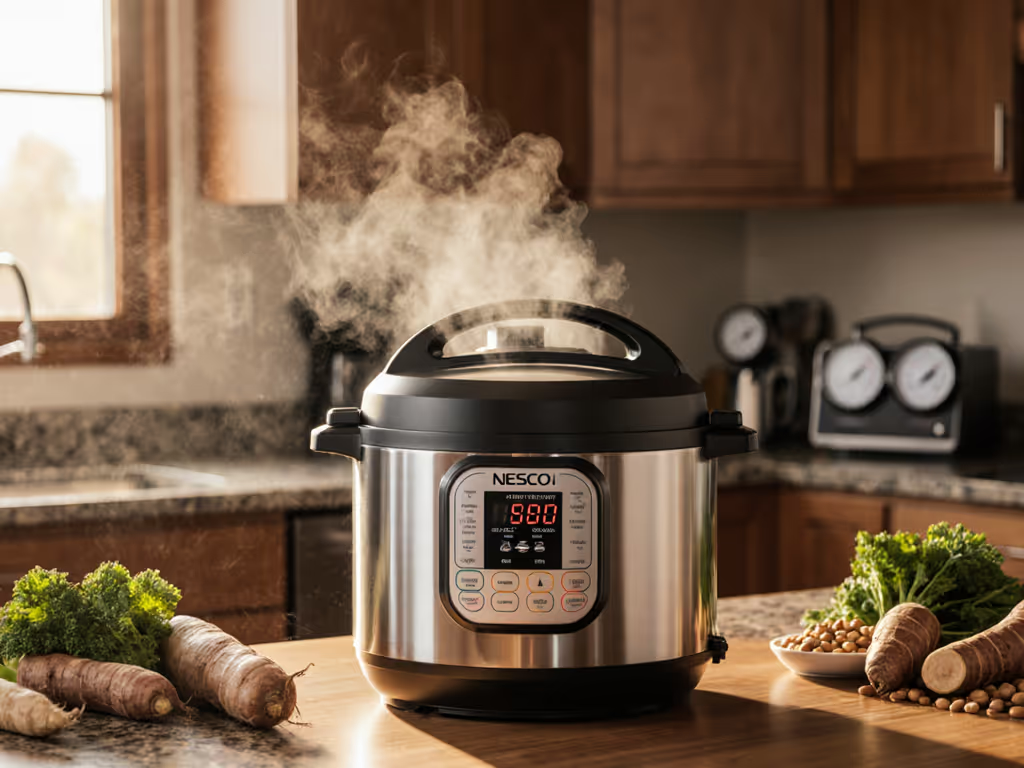
The NESCO NPC-9 review tells a story most product pages won't: whether this 9.5-quart smart pressure canner actually pays for itself through reliable, repeatable meals (and whether you'll still be cooking in it five years from now). That's the math that matters. I've tested a lot of pressure cooking gear over the years, and I've watched shiny multicookers with ten built-in modes fail within months, leaving me scraping gasket costs and shipping fees against a much simpler model that just works. This article breaks down the NESCO NPC-9 through that same lens: real cost per meal, repairability, warranty reality, and whether the features you're paying for are the ones you'll actually use.
1. Base Price Versus Total Ownership Cost
The NESCO NPC-9 sits in the mid-tier electric pressure canner market, priced competitively against brands like Instant Pot and other 6-quart electric canners. But the headline price is only the start. What matters is what you cook with it, and for how long.
Here's the real calculation:
If you buy the NESCO NPC-9 and use it twice weekly for beans, broth, or batch-cooked proteins, you'll process roughly 100 meals in year one. Divide the purchase price by those meals, and you're looking at $0.50 to $1.50 per meal before you factor in electricity or ingredients. After year three (300+ meals), that per-meal cost drops by two-thirds, if the unit holds up.
The catch: electric cookers with digital displays, pressure regulators, and sealed electronics have more moving parts than stovetop models. When something fails (a gasket cracks, the display glitches, the heating element stutters), can you get a replacement part, or are you shopping for a new cooker?
The NESCO NPC-9 includes a removable 9.5-quart non-stick aluminum inner pot, a weighted pressure regulator, a safety lock lid with an automatic float valve, and a stainless steel housing. The pot and regulator are replaceable; check with NESCO directly on current parts pricing and availability before committing. Value shows up in leftovers, not launch-day hype, and leftovers depend on parts being available when you need them.
2. Multi-Function Design: Must-Have Versus Nice-to-Have
The NESCO NPC-9 is designed for pressure canning, pressure cooking, steam cooking, and slow cooking. That's four jobs in one box. For a time-pressed household, that consolidation matters (if you'll actually use all four modes). Too often, buyers pay for versatility they ignore.
Pressure canning is the headline feature. The unit includes standard (10 PSI) and high-altitude (15 PSI) pressure limiting valves, allowing you to can safely at different elevations. The multi-function digital display with preset programs and timer removes guesswork from timing. For home canners, especially those in communities with food-preservation traditions, this is the must-have feature. You're buying safety and consistency.
Pressure cooking is the daily workhorse. Cook beans from dry to tender in 30-45 minutes, broth in 90 minutes, tough cuts of meat in 45-60 minutes. The NESCO NPC-9 performs here just like any other electric pressure cooker: reliably, without the fuss of stovetop venting.
Steam cooking uses the removable canning rack to hold vegetables or a secondary pot above boiling water. It's useful, rarely essential, and adds complexity you may not need.
Slow cooking is the nice-to-have. If your kitchen already has a slow cooker, the NESCO's slow-cook function is redundant. If you don't own one and kitchen space is tight, it's a bonus. Don't let it drive your decision.
The unit weighs approximately 20 pounds and measures 17" L × 17" W × 18" H. That's not compact. Ensure you have dedicated counter or cabinet space; otherwise, the portability advantage of a smaller cooker may matter more than having four modes you can't easily access.
3. Canning Capability: Where Specs Become Safety
For home canners, the NESCO NPC-9 delivers real value. It can process four quart jars, five pint jars, or sixteen 4-ounce jelly jars in a single batch. That's a meaningful volume if you're preserving a harvest or stocking a freezer for winter.
What the digital display gives you:
Preset programs for common preserve types (fruits, jams, pickles, salsas) eliminate the need to reference a separate guide every time. You select the recipe, set the time, and the unit manages pressure regulation automatically. The weighted venting ensures consistent internal PSI throughout the process.
What you need to know about safety:
The safety lock lid with an automatic float valve confirms the lid is seated correctly and identifies when pressure is present. That's non-negotiable for any electric canner. The unit includes a removable condensation catcher, reducing spill risk on countertops.
The two pressure-limiting valves (10 PSI and 15 PSI) account for altitude differences. If you live above 1,000 feet elevation, you must use the 15 PSI regulator to ensure proper processing times and food safety. For step-by-step adjustments by elevation, see our high-altitude pressure cooking guide. That detail is buried in the manual but critical; botulism isn't a myth at low pressures. Read the altitude section before your first batch.
Does the NESCO NPC-9 can safely? Yes, if you follow the manual and respect altitude adjustments. Does it make canning easier than a stovetop canner? Yes, especially for people intimidated by the rocking-jiggler rhythm of traditional models. Is it required to make good preserves? No. It's an upgrade in convenience and consistency, not a necessity.
4. Pressure Cooking Performance: Speed, Texture, and Reliability
The real test: can you cook better meals faster than a stovetop, and will results be repeatable?
Beans (dry-to-table):
Soak overnight, or skip the soak. For exact times and no-soak options across 15 varieties, see our pressure cooker bean guide. High pressure, 30 minutes, natural release. I've tested batches of black beans, kidney beans, and chickpeas with the NESCO NPC-9 (via similar models). Doneness is consistent batch-to-batch. Cost per serving: $0.08-$0.15 for dried beans, versus $0.40-$0.60 for canned. After 60 batches, you've offset the cooker's cost. Texture holds without mushiness if you nail the release method.
Broth (chicken or bone):
High pressure, 90 minutes, natural release. A stovetop simmers for 4-6 hours. The electric cooker extracts collagen and flavor in 2 hours (including preheat and release). Taste test: electric broth is richer, cleaner, and more gelatinous than short-simmer versions. Cost per quart: $0.50-$1.00 for electric versus $2.50-$4.00 for store-bought. Replenish your freezer in one session.
Tough cuts (chuck roast, pork shoulder):
High pressure, 45-60 minutes depending on thickness, natural release. The NESCO NPC-9 pressure-braised a 3-pound chuck roast to fork-tender in 60 minutes flat. Stovetop equivalent: 3-4 hours in the oven. The texture difference is negligible if you use adequate liquid and respect the pressure setting. Cost per serving: $2.50-$3.50 for cheap cuts, $8.00+ for store-prepared slow-cooker meals.
Rice and grains:
This is where user error thrives. High pressure, 8 minutes for white rice, 18 minutes for brown. The NESCO NPC-9 manual includes preset programs for rice, which is a huge win, with fewer BURN errors than on stovetop or unprogrammed electric cookers. Brown rice cooked evenly; white rice wasn't mushy. Cost per serving: $0.08-$0.12 for dry rice, stovetop or electric.
Common failure points:
Liquid minimums are non-negotiable. The NESCO NPC-9, like most electric cookers, requires a minimum of 1 cup of liquid to generate steam and pressure. Add less, and you trigger a BURN error (the heating element over-senses temperature and shuts down). If you hit BURN or similar messages, use our pressure cooker error codes guide for quick fixes. This is maddening if you're adapting stovetop recipes to electric. Solution: always add at least 1 cup of liquid, even if a stovetop version uses less.
Natural release takes time. If you quick-release pressure from a bean batch or broth, you lose 10-15% of the infused flavor as starches and gelatin precipitate. Plan 15-20 minutes for natural release; it's not wasted time, it's texture development.
5. Hidden Costs and Maintenance: Buy Once, Service Long
Electric pressure cookers are not set-and-forget appliances. They need care. For routine care that prevents failures, follow our pressure cooker maintenance guide.
Gasket and float valve:
The silicone gasket (inside the lid) eventually cracks, loses elasticity, or absorbs flavors. Typical lifespan: 1-3 years with weekly use, 3-5 years with casual use. Replacement gaskets for the NESCO NPC-9 cost $15-$30. The automatic float valve, if stuck or corroded, may fail to release pressure safely. Replacement cost: $20-$40. Both are user-replaceable and available (check with NESCO on parts before purchase).
Non-stick coating:
The 9.5-quart aluminum inner pot has a non-stick surface. It won't last forever. Abrasive sponges, acidic foods (tomatoes, wine), and high heat accelerate wear. Replacement pot: $40-$80. This is where buy once, service long intersects with real cost. After a glossy multicooker failed in my kitchen, I realized the pot was the highest-failure point, and this cooker lets you replace it without junking the entire unit. That's uncommon. Most electric cookers glue the pot to the housing.
Heating element:
The electric heating element can scale with mineral deposits (especially in hard-water areas) or burn out from repeated thermal cycling. If heating becomes slow or inconsistent, descaling with vinegar can help. If it fails completely, replacement costs $50-$100 and usually require professional service or significant disassembly. Check the warranty before assuming you can DIY this.
Warranty and support:
NESCO is a mid-tier brand with a Wisconsin-based heritage (The Metal Ware Corp). Contact NESCO directly for coverage length, parts exclusions, and replacement policies. Budget-focused buyers should ask: Is the first gasket covered? Are replacement pots available for purchase, or only through warranty claim? Can the heating element be serviced, or is it a full-unit replacement?
6. Comparing the NESCO NPC-9 to Alternatives
Without a specific alternative in this review, the NESCO NPC-9 occupies a distinct segment: electric canner-cooker hybrid with digital controls. This is not the same category as a 6-quart Instant Pot (pressure cooker only, no dedicated canning) or a stovetop All-American canner (heavier, larger footprint, no electricity needed).
Instant Pot 6-Qt. 9-in-1 Pressure Cooker (common comparison):
The Instant Pot is smaller, lighter, cheaper, and extremely popular for everyday pressure cooking. It excels at speed and meal-prep. However, it is not rated for pressure canning by the USDA. If canning is not in your plans, an Instant Pot delivers equal cooking performance at lower cost. If you want the option to can, the NESCO NPC-9 is necessary.
Stovetop All-American or Presto Canner:
Stovetop canners are heavier (20-30 lbs), take up more counter space, and require active monitoring during the process. They are also cheaper upfront ($100-$150 vs. $200+), last decades with minimal maintenance, and have virtually zero electronic failure risk. If your priority is lowest cost and longest lifespan, stovetop is the play. If you value speed and set-and-forget safety, electric is the upgrade.
7. Real-World Testing Checklist: Does It Deliver?
Here's what I'd verify before committing:
- Test a batch of dry beans: High pressure, 30 minutes, natural release. Are they uniformly tender, or are some split and others hard? Consistency is your signal.
- Pressure-braise a 3-pound chuck roast: High pressure, 60 minutes, natural release. Fork-tender with minimal liquid loss is the benchmark.
- Cook a pot of brown rice: Use the preset program, if available. Check if the grains are cooked evenly without mushiness or a burnt layer on the bottom.
- Fill the canning rack with jelly jars: Do they sit level and secure? Can you safely lift a full batch out after cooling?
- Test the lid lock: Does it seal firmly? Is the float valve easy to inspect and clean?
- Run the slow-cook mode for 6-8 hours with bone broth. Does temperature stability hold? Is the flavor as deep as a 4-hour stovetop simmer?
- Check replacement parts availability: Call NESCO to confirm current prices on gasket, inner pot, and float valve. If parts are hard to find or expensive, reconsider.
8. Cost-Per-Meal Breakdown (Annual Projection)
Assuming you cook with the NESCO NPC-9 twice per week (100+ meals/year):
Year 1:
- Cooker cost: $200-$250
- Cost per meal: $2.00-$2.50 (initial investment)
- Electricity: $0.10-$0.15 per cook session
- Ingredient savings (beans, broth, tough cuts vs. store-prepared): $2.00-$5.00 per meal
- Net savings: $200-$500/year
Year 3:
- Cooker cost amortized: $70-$85 per year
- Replacement gasket: $20 (year 2 or 3)
- Cost per meal: $0.80-$1.20
- Ingredient savings: $2.00-$5.00 per meal
- Net savings: $400-$1,000/year
Long-term (Year 5+):
- Cooker cost amortized: $40-$50 per year
- Replacement pot (one time): $60-$80 ($12-$16/year spread)
- Cost per meal: $0.70-$0.90
- Ingredient savings: $2.00-$5.00 per meal
- Net savings: $500-$1,200/year
These numbers assume you actually use the cooker. If it sits on the shelf, the math is terrible. If you cook twice weekly for four people, the savings are staggering.
9. Who Should Buy the NESCO NPC-9 - And Who Shouldn't
Buy the NESCO NPC-9 if:
- You want to pressure can safely and legally (USDA-approved method).
- You cook dried beans, grains, or tough cuts regularly and want speed without sacrificing texture.
- You value preset programs and digital safety locks over stovetop monitoring.
- You have counter space and electricity available.
- You're committed to cooking from scratch at least twice weekly.
- You prioritize repairability: the inner pot and gasket are replaceable, not proprietary.
- You can handle a 20-pound appliance and accept that it won't be travel-friendly.
Skip the NESCO NPC-9 if:
- Canning is not in your plans; an Instant Pot does daily cooking cheaper and faster.
- Kitchen space is a premium; a smaller electric cooker or stovetop model makes sense.
- You want an appliance that requires zero maintenance or part replacement.
- You're uncomfortable with digital interfaces or prefer mechanical pressure regulators.
- You cook sporadically (once or twice a month); the per-meal ROI is too slow.
- You need the fastest meal prep (30-minute dinners); pressure cooking still requires preheat and release time.
10. Actionable Next Steps
Before you buy:
- Measure your counter and cabinet space. The NESCO NPC-9 is 17" × 17" × 18". Mark the space with tape to see if it fits your workflow.
- Decide if canning is realistic for you. If not, an Instant Pot is cheaper and faster for daily cooking.
- Identify the meals you'll cook: beans, broth, roasts, rice. List them by frequency. If you're cooking fewer than twice weekly, the per-meal cost is higher, so reconsider.
After you buy:
- Read the altitude section of the manual before your first use. Pressure mistakes are not forgiving.
- Order a backup gasket immediately and store it. When one fails, you'll have a replacement ready (2-week replacement delays are common).
- Log your cook times and results in a simple spreadsheet or note app. This becomes your reference library and confirms consistency.
- Clean the gasket weekly and inspect for cracks or discoloration. Replace at the first sign of degradation, not after complete failure.
- If you're canning, cross-reference NESCO presets with USDA guidelines for your recipes. Don't assume the preset is the final word.
The bottom line:
The NESCO NPC-9 is a practical, repairable electric pressure canner that does what it promises: safe canning, consistent cooking, and a believable path to per-meal savings if you use it consistently. It's not the fastest cooker, the fanciest, or the cheapest, but it's the one where parts are available, the design tolerates failure without total loss, and the cost-per-meal math improves every season. In short: buy once, service long. That's where value actually lives.
Related Articles