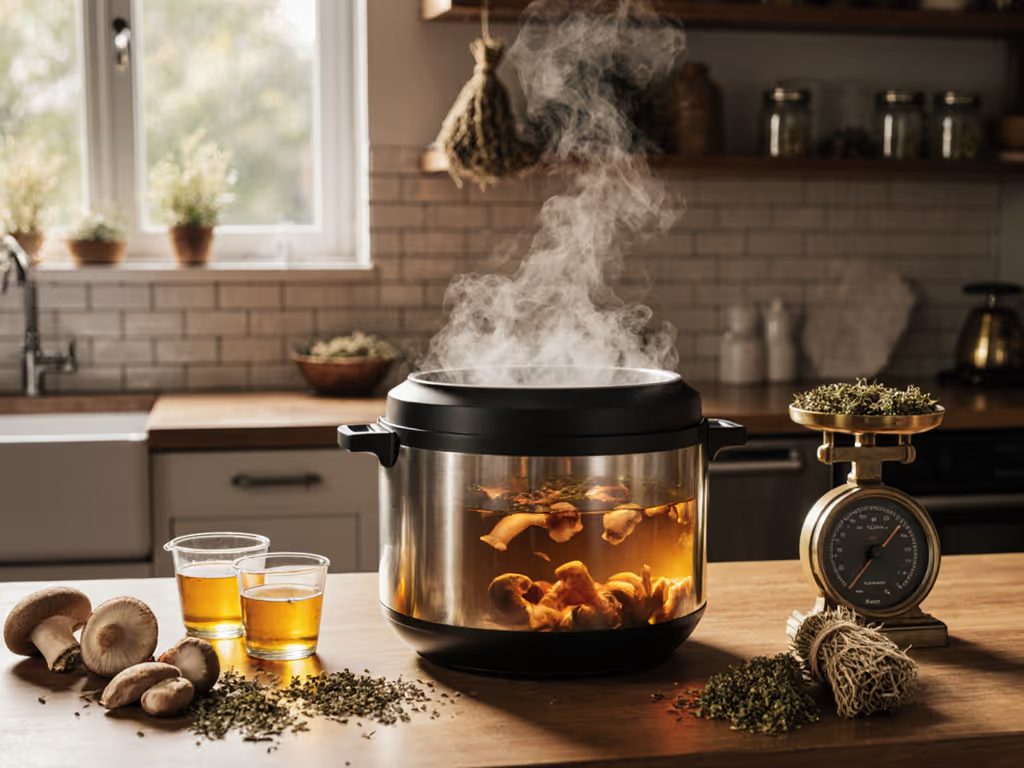
Pressure Cooking for Hormonal Health
By Lina Ortega • 31st Mar
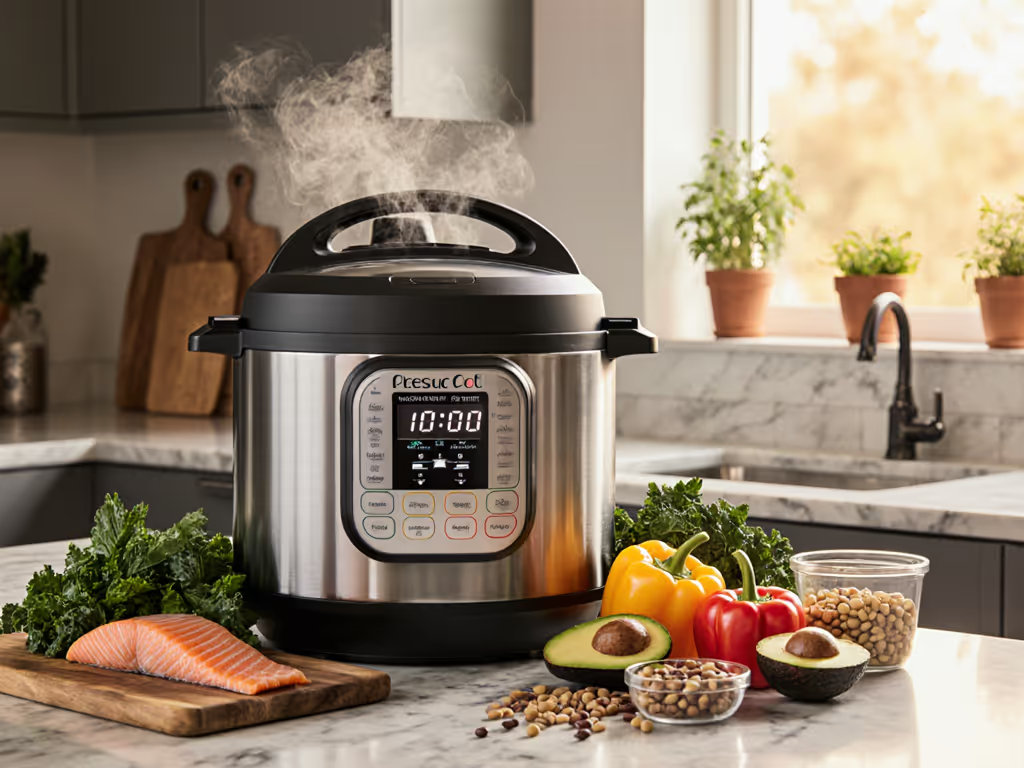
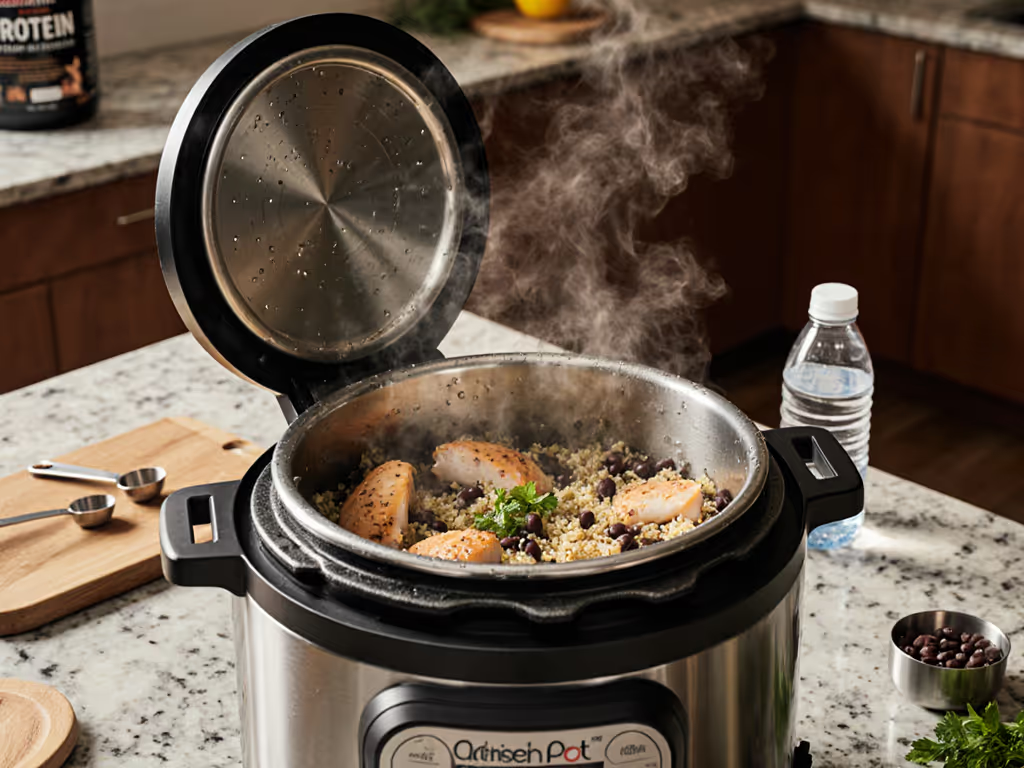
Your hormones don't care about convenience, they care about fuel. Hormonal health pressure cooking hinges on one non-negotiable fact: your endocrine system depends on consistent nutrient availability, especially iron, B vitamins, calcium, and magnesium. If your cooking method destroys 40-75% of what you've bought, you're not saving money on groceries; you're hemorrhaging the very nutrients your menstrual cycle, metabolism, and mood regulation need. This is where pressure cooking becomes a practical tool, not a trend.
I learned this the hard way. A glossy multicooker promised "hormonal health" mode and seven preset buttons. A week after warranty expired, the gasket cracked and the heating element failed. I found myself adding up: $120 replacement gasket, $45 return shipping, three weeks without a tool I'd already paid for. Meanwhile, a durable stovetop pot I'd inherited? Still there, twenty years later, its parts available for under $20. That taught me something about what actually supports wellness: not the features you won't use, but the equipment that won't abandon you when you need it most.
The pressure cooker's real value for hormonal health isn't hype; it's nutrient retention for women's health, delivered at a pace that fits a working life.
Why Nutrient Loss Matters for Your Hormones
Different cooking methods destroy nutrients at different rates. Boiling (the traditional fallback for legumes and grains) leaches vitamins and minerals directly into the cooking water, which you then throw away. Research shows boiling retains only 25-60% of nutrients.[4] Steaming fares better but still loses significant amounts.[4]
Pressure cooking changes the math: it retains approximately 90-95% of nutrients.[3] That difference isn't academic. When you cook broccoli by pressure, 90% of its vitamin C remains.[4] The same broccoli steamed retains 78%; boiled, just 66%.[4] Scale that across a week of meals (proteins, greens, legumes), and you're talking about meaningful differences in bioavailable vitamin C, folate, B6, and minerals your reproductive hormones depend on.
Why does pressure cooking preserve more? Two mechanics:
- Shorter cooking times. Pressure cooking reduces total cook time by up to 70%.[2] Heat-sensitive nutrients like ascorbic acid and beta-carotene degrade less when exposure is brief.[1]
- Less nutrient loss to liquid. In traditional boiling, nutrients dissolve into the cooking water. Pressure cookers use less liquid overall and trap it as steam, so fewer vitamins leach away.[4]
For women's health pressure cooking, this has concrete implications: your beans retain more folate, your bone broth captures more minerals, your root vegetables keep their micronutrient load. That stack of retention matters when your body is managing a menstrual cycle or navigating menopause.
Hormonal Phases and Nutrient Demands
Your nutritional needs shift across your menstrual cycle. The luteal phase (after ovulation) increases caloric and micronutrient demands, particularly iron and magnesium. Menopause brings surging demands for calcium, magnesium, and boron. Pressure cooking doesn't replace supplementation or physician guidance, but it does mean the food you prepare actually delivers what you buy.
Consider this practical equation:
- A pound of dried beans costs $1.50 and contains roughly 15 grams of protein and significant iron, folate, and magnesium.
- Cooked by traditional boiling (60+ minutes), you lose 40-60% of folate and notable amounts of other micronutrients. Cost per usable nutrient rises.
- Cooked by pressure (10-12 minutes), you retain ~90%.[3] Cost per usable nutrient drops.
Over a month of meal-prepped beans and legumes, that's not a rounding error. For precise no-soak timings and varieties, use our pressure cooker bean guide. It's the difference between "I bought nutritious food" and "I actually ate nutritious food."
Pressure Cooking vs. Other Methods: A Data-Driven Comparison
| Method | Cook Time | Nutrient Retention | Energy Use | Cost Efficiency |
|---|---|---|---|---|
| Boiling | 45-90 min | 25-60% | High (sustained heat) | Low (nutrient loss) |
| Slow cooking | 6-8 hours | 60-75% | Moderate (long duration) | Medium (some loss) |
| Oven roasting | 30-45 min | 70-85% | High (oven preheat) | Medium |
| Pressure cooking | 10-25 min* | 90-95% | Low (short, sealed) | High |
*Includes preheat and natural release, which aren't always listed in recipes.
For budget-conscious cooks, that efficiency gap justifies the equipment cost. For the details behind it, see how pressure cookers save energy and why it lowers bills. A functional pressure cooker (stovetop or electric) starts at $40-80. If you cook legumes twice weekly over five years, you're looking at 500+ meals. Add nutrient preservation, energy savings, and time reclaimed, and the math argues for itself.
Pressure Cooking and Anti-Nutrient Reduction
One often-overlooked benefit: pressure cooking reduces anti-nutrients like phytic acid better than other methods.[1][8] Phytic acid binds minerals (iron, zinc, magnesium) and reduces their bioavailability. Soaking beans helps, but pressure cooking goes further by combining heat, pressure, and moisture in a way that degrades phytic acid efficiently.[1]
For women managing menstrual-related anemia or magnesium depletion, this means the iron and magnesium in your beans are actually absorbable, not just present on a nutrition label.
Practical Checklist: Setting Up for Reliability
Where Lina's bias shines: value beats novelty. You don't need a $300 Instant Pot to get hormonal health benefits. You need a durable tool with available replacement parts and a clear manual. If you're new, start with our safe first-time use guide.
Essential, repairable basics:
- Stovetop pressure cooker (6 or 8 quart): $50-100. Parts: gasket (
$15), safety valve ($10). Lifespan: 20+ years. - Electric pressure cooker (6 quart, simple model): $60-120. Check parts availability before buying; avoid models discontinued in the past 3 years.
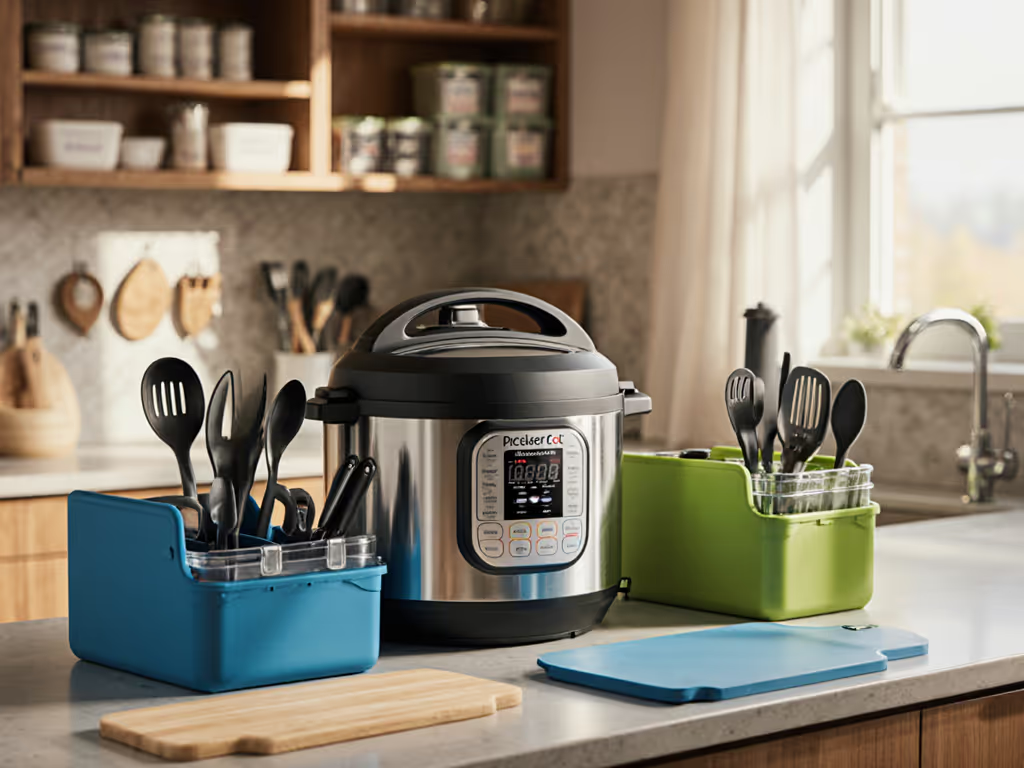
Must-have accessories (truly necessary, not fluff):
- Trivet or rack (often included; costs ~$5 to replace)
- Measuring cups and a basic kitchen scale
- A meat thermometer for doneness confirmation
Skip entirely unless you cook specific dishes weekly:
- Multiple silicone lids, fancy baskets, glass accessories, extra gaskets beyond a spare set
Maintenance that matters:
- Replace gaskets every 12-24 months if cooking 2+ times weekly (cost: $15-20)
- Soak the ring in vinegar monthly to control odor
- Check the safety valve quarterly
These aren't hidden costs (they are predictable). Use our pressure cooker maintenance guide to keep gaskets and valves in top shape. That's different from a dead heating element you discover only after warranty ends.
Sample Hormone-Supporting Meal Templates
To tie this into actionable cooking:
Iron-rich menstrual-cycle cooking techniques: 30 min total (includes preheat)
- Pressure-cooked lentils + bone broth + diced beets
- Cooks lentils in 8 minutes; retains ~90% of folate and iron
- Cost: ~$1.20 per serving; makes 6 servings
Magnesium-focused menopause symptom management: 25 min total
- Beans + collard greens + fermented cod liver oil (optional)
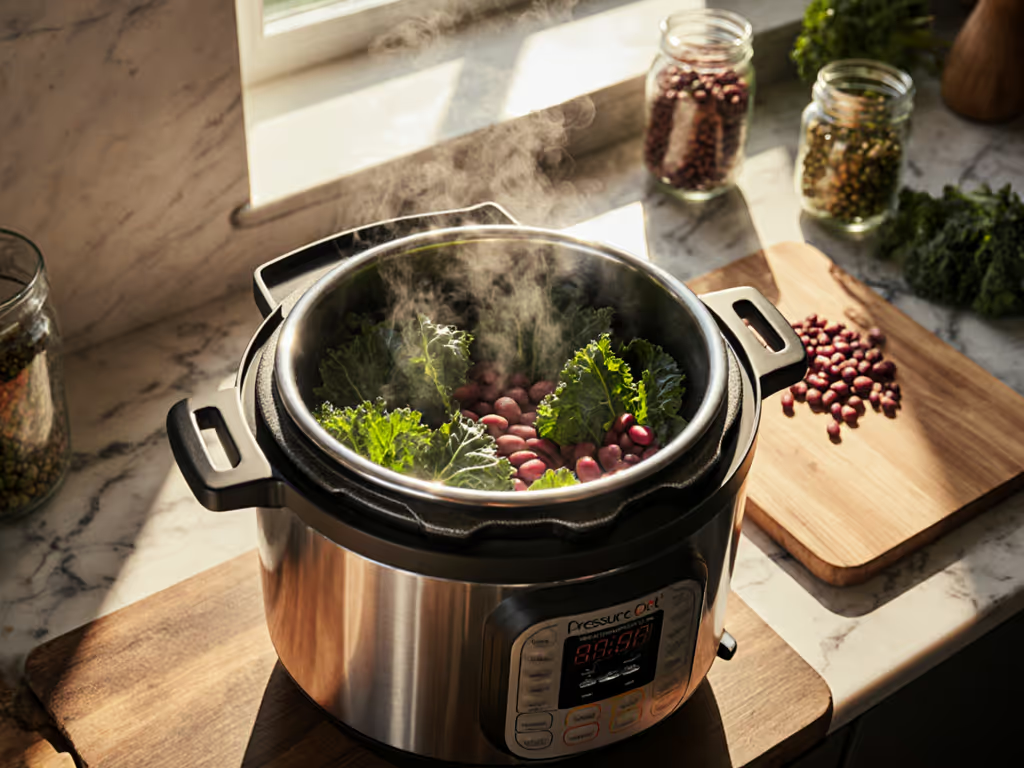
- Beans cook in 12 minutes at high pressure; greens steamed on trivet for final 3 minutes
- Cost: ~$0.90 per serving; makes 8 servings
Bone broth for mineral density: 120 min passive time
- Rotisserie chicken carcass + vegetable scraps + water
- High pressure, natural release; nutrients locked in
- Cost: ~$0.50 per cup; yields 8-10 cups
The Actionable Next Step
If you're managing a menstrual cycle or menopause, or simply trying to maximize the nutritional value of affordable whole foods, pressure cooking is worth testing... but not with hype, with math.
Start here:
- Audit your current method. How long does a pound of beans take? What's your cost per serving? (Don't guess... measure.)
- Test one recipe. Lentil soup or beans and rice. Compare cook time, per-serving cost, taste, and leftovers shelf-life against your usual approach.
- Inspect parts availability. Before buying, search the manual online. Can you buy a gasket? A valve seal? Is the manufacturer still supporting this model? If parts aren't available or are priced like luxury goods, move on.
- Cook consistently. Hormonal support isn't about one meal, it's about steady, nutrient-dense eating. Pressure cooking becomes valuable only if it removes friction from your weekly routine.
Affordability plus reliability beats features you won't use, and it beats nutrient loss you didn't plan for. That's the real payoff for hormonal health.
Related Articles