Induction vs Gas Pressure Cookers: Performance Tested
By Mei Tanaka • 28th Apr
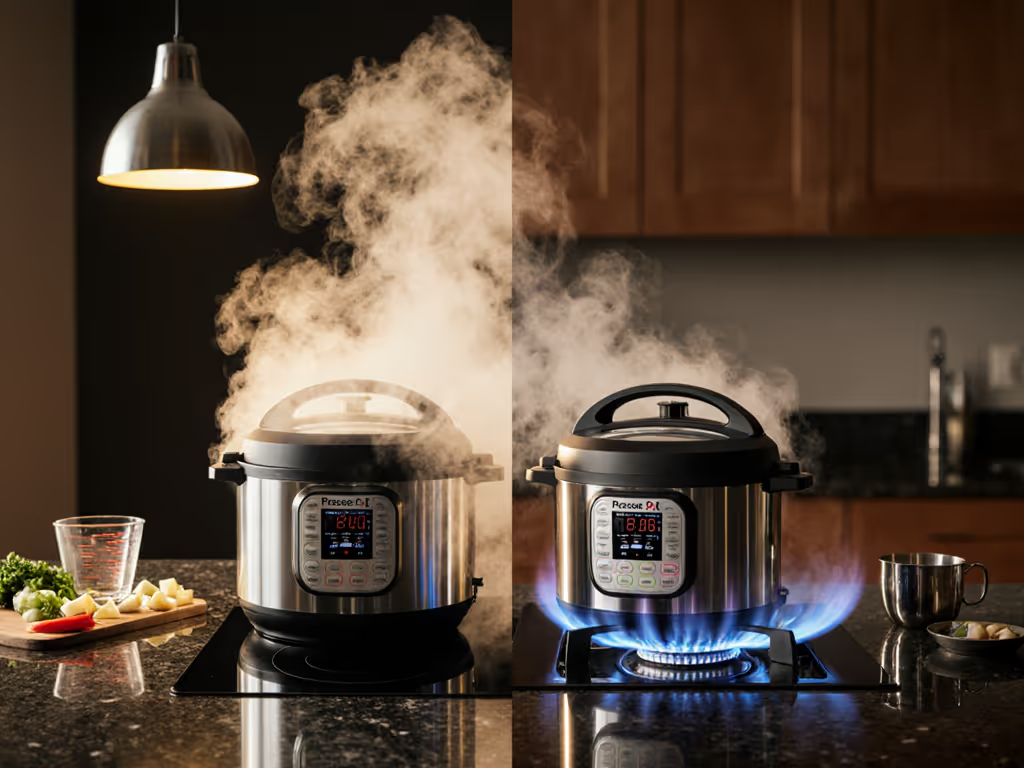
Choosing between induction pressure cooker compatibility and a traditional gas stove matters far more than most home cooks realize. That stovetop choice shapes not just how fast your beans cook, but whether your batch system works reliably week after week.
The Core Technology: How Heat Reaches Your Pot
Induction and gas cooktops generate heat in fundamentally different ways, and that difference compounds when you're cooking under pressure.
Gas stoves use an open flame fueled by natural gas or propane to directly heat cookware and cook your food.[1] The heat spreads around and under the pan, with significant energy wasted into the surrounding air and kitchen itself. Induction cooktops use electromagnetism to transform compatible cookware into its own source of heat.[4] Energy is directed into the cookware base instantly, transferring with approximately 85% efficiency, compared to just 32% for gas-powered heating elements.[3]
For pressure cooking, this distinction matters because pressure cookers rely on sustained, controlled heat to build and maintain PSI. If you're new to PSI control, see safety valves and PSI control for how venting and regulators keep pots safe. A cooktop that wastes heat can make it harder to reach stable pressure, and it can make temperature swings unpredictable when you adjust the flame.
Speed and Induction Pressure Cooker Performance
Induction's efficiency advantage becomes obvious in pressure-cooker workflows. Induction technology can bring a pot of water to boil in as little as two minutes.[1] When CHOICE experts tested boil times, one of the top induction models took just two minutes and 19 seconds to bring a litre of water to the boil, while a gas cooktop took four minutes or longer.[3]
Translate that to a pressure cooker on your stovetop: induction reaches working pressure (typically 10-15 PSI) faster, meaning your preheating window is shorter. If you're batch cooking beans, broth, or tough cuts on a Sunday night (the kind of prep that used to swallow the evening), shaving 2-3 minutes off preheat time compounds when you're running multiple pots. Cook once, enjoy twice. The math improves.
Gas cooktops offer responsive flame adjustments and typically work with most cookware, making it a favorite for cooks who value visual flame control.[4] That responsiveness can feel intuitive if you're used to gas, but it also means you're managing active heat adjustment throughout the cook cycle, not setting it and trusting the induction coil to hold steady.
Heat Distribution Testing and Consistency Across Pot Sizes
Consistency is the hidden cost of batch cooking. If your 6-quart and 8-quart pots cook at different speeds on the same heat source, your timeboxed recipe template breaks.
Induction cooktops are best suited for pots and pans with flat bottoms (like cast iron or stainless steel), which help ensure even heating and stability on the cooktop surface.[2] Because the electromagnetic field is generated directly in the cookware base, heat distribution is predictable regardless of pot size, as long as the cookware is induction-compatible. This matters for pressure cooking: uniform heat means consistent pressure buildup.
Gas flames, by contrast, distribute heat less evenly, especially with larger pots. Hot spots and cooler edges can lead to uneven pressure if the cooktop's BTU output varies or if you're using a larger vessel on a smaller burner.
Energy Efficiency Across Cooking Surfaces: Cost and Speed Tradeoffs
Induction cooktops can be up to three times more efficient than gas, helping reduce overall energy use.[4] For the science behind those savings, see how pressure cookers save energy. That's not just environmental marketing, it translates to real cost savings, especially if you're running multiple pressure-cooking sessions per week.
But efficiency isn't the only factor in total cooking time. Preheat time, natural release time, and the energy it takes to maintain pressure all matter for meal-prep planning:
- Induction preheat: 2-3 minutes to boiling; 5-8 minutes total to reach working pressure (depending on pot size and liquid volume)
- Gas preheat: 4-5 minutes to boiling; 8-12 minutes to reach working pressure
- Natural release (both): 10-20 minutes, depending on pressure level and pot size
When you're timeboxing steps, that induction edge multiplies. A 3-quart pot of beans on induction might go from cold to pressurized in 10 minutes; on gas, 15-18. Over five batches in a month, that's 25-40 minutes of cumulative time back in your week.
Cookware Compatibility and Pressure-Cooker Constraints
Induction technology can only work with certain cookware.[1] Your pressure cooker's base must be ferromagnetic: stainless steel works; aluminum does not. Many traditional stovetop pressure cookers (especially older models and international brands) are aluminum, which means they won't work on induction at all.
If you're considering an induction stovetop or induction cooktop upgrade, verify your pressure cooker's base. Look for a magnet test: if a magnet sticks to the bottom, you're induction-ready. For model picks and magnetic-base tips, read our induction compatibility guide. If it doesn't, you're gas-only with that cooker.
Gas offers universal cookware compatibility. Any stovetop pressure cooker (aluminum, stainless steel, copper-bottom) will work on gas. That flexibility is invaluable if you inherit a family cooker or use traditional models from South Asian, Latin American, or African cuisines.
Safety and Control: The Induction Advantage
Induction stoves are safer because you can't heat up a burner without a pan in place.[6] For pressure cookers, that's a real psychological benefit. You can't accidentally preheat an empty cooker and forget it (a common cause of safety incidents). The burner simply won't activate without compatible cookware sitting on it.
Gas cooktops emit benzene and other pollutants, which can be harmful if you're cooking in a small, poorly-ventilated space like an apartment kitchen.[1] Induction cooktops and ranges are electromagnetic and run off of electricity, so there's no risk of harmful pollutants getting into the air. If you're running a batch-cooking session on a Sunday night in a small kitchen, that air quality difference compounds over 2-3 hours of cooking.
Gas excels at visual flame control and techniques like adjusting heat mid-cook, but that same open flame means you're managing an active ignition source around a pressurized vessel. Induction's sealed glass surface eliminates that variable entirely.
Batch-Cooking Workflows: Templates and Yield Planning
Here's where the choice becomes practical: how you design your batch-cooking system.
On induction, your timeboxed template is tighter:
- Preheat: 8 minutes
- Pressure cook (beans, rice, tough cuts): 25-35 minutes at pressure
- Natural release: 15 minutes
- Total per batch: ~50-60 minutes
That predictability means you can run two pots in 90 minutes (say, a pot of beans and a pot of broth), yielding ~6 cups of cooked beans and ~8 cups of stock. Yields in cups become repeatable; your label template (fridge: use by Friday; freezer: use by month-end) stays consistent.
On gas, times stretch:
- Preheat: 12-15 minutes
- Pressure cook: 25-35 minutes (same)
- Natural release: 15 minutes
- Total per batch: ~60-70 minutes
Two pots now take 110-130 minutes. That's a 20-minute swing per session, which means your evening prep plan either compresses or sprawls depending on how consistent your gas flame is.
Neither is wrong, but induction's tighter margins make batch-cooking templates more predictable and repeatable. And when life gets busy, predictability wins every time.
Troubleshooting and Failure Recovery
Both induction and gas pressure cookers can fail to reach pressure, overshoot, or cook unevenly. If pressure won't build, start with our steam leaks and pressurization fixes. The root causes are often the same (not enough liquid, overfilled pot, damaged gasket), but troubleshooting differs slightly.
Induction cookers are easier to debug because heat output is consistent. If pressure isn't rising, it's almost always a pot-side issue: sealed gasket, adequate liquid, compatible cookware. You're not troubleshooting whether the induction coil is working, it either generates heat or it doesn't.
Gas cookers add a variable: flame adjustment and burner condition. A weak flame, misaligned burner cap, or uneven heat can mimic pot-side failures, making it harder to isolate the real problem.
For batch-cooking confidence (especially if you're cooking for a family or prepping for meal-prep clients), induction's diagnostic simplicity is worth noting.
The Real Cost: Appliance Investment and Long-Term Value
Gas cooktops from brands like Whirlpool range from around $700 to $1,500, depending on the desired features and sizes.[2] Induction cooktops range from roughly $1,000 to $1,750, yet can be three times more efficient than gas, depending on the model (which may help decrease your energy costs).[2]
That induction premium (roughly $300-$500) pays back through energy savings and faster cooking time if you're batch-cooking regularly. Over five years of weekly pressure-cooking sessions, the efficiency edge compounds. Over ten years, induction saves money.
But if you already have a gas stove and your stovetop pressure cooker works on it, the upgrade cost isn't justified just for pressure cooking. The decision becomes about your broader kitchen goals. Still choosing your appliance type? Compare stovetop vs electric pressure cookers.
Final Verdict: Which Is Right for Your System?
Choose induction if:
- You're building a new batch-cooking system and want predictable, repeatable timeboxes
- Your kitchen is small or poorly ventilated
- You value faster preheat times and lower energy costs
- You want a sealed, safer cooktop for active pressure-cooking sessions
- Your pressure cooker has a stainless steel base (magnet test it first)
- You're willing to invest in the appliance upfront for long-term reliability
Choose gas if:
- You already own a gas stove and an aluminum or traditional stovetop pressure cooker
- You prefer visual flame control and fine heat adjustments
- You value universal cookware compatibility
- Your kitchen is well-ventilated
- You want to avoid the appliance cost today
The honest truth: both induction and gas will cook your pressure cooker reliably. Induction wins on speed, efficiency, and consistency; gas wins on flexibility and cost. The real gain isn't in choosing one over the other, it's in building a repeatable batch-cooking template around whichever you pick, then sticking with it.
Once you commit to a system (whether induction or gas), map it out like I did: one pressure-cooked pot of beans, one grain, and one protein into five weeknight meals. Label your yields in cups and portion sizes. Timebox your steps. Freeze what you prepped with confidence. Templates turn pressure into predictable, calm weeknights and full fridges. Cook once, enjoy twice.
Related Articles