Pressure Cooker Air Fryer: Combo vs Separate
By Mei Tanaka • 16th Apr
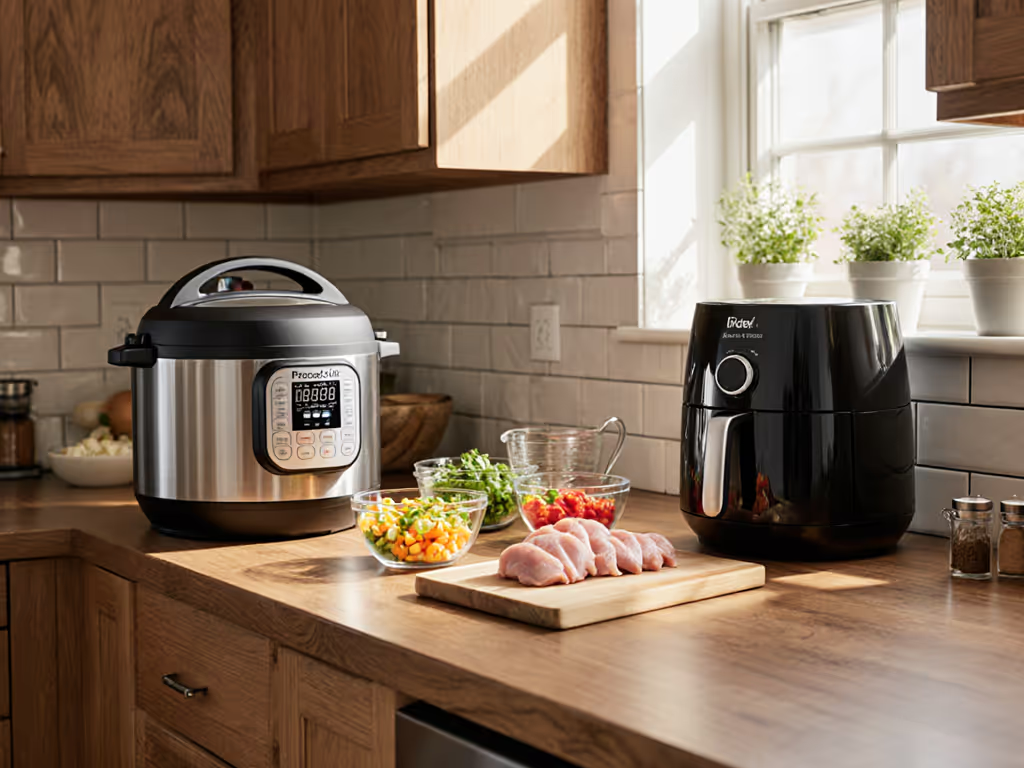
The counter space in most urban kitchens is finite. When you're weighing whether to buy a pressure cooker air fryer combination unit or invest in two separate appliances, the real question isn't "which is better?", it is "which setup delivers the highest yield per square foot and dollar spent?" Understanding the choice between a combo air fryer pressure cooker and separate units requires moving past marketing and into meal-prep math.
I remember orchestrating multiple pots on Sunday nights: pressure cooker hissing, stovetop simmering, oven preheating. Dishes stacking. Fridge already crowded. Then I mapped one pressure-cooked pot of beans, one grain, and one protein into five weeknight meals using a simple timing grid and freezer labels. That single system (one template, one batch window, predictable results) changed everything. The power wasn't in more appliances; it was in owning the right ones for the job.
If you're navigating kitchen constraints and deciding whether to consolidate or separate, this guide walks you through the decision with data and a repeatable framework.
Understanding the Core Functions: What Each Appliance Does
Before comparing options, clarity on function is essential.
How Pressure Cookers Work
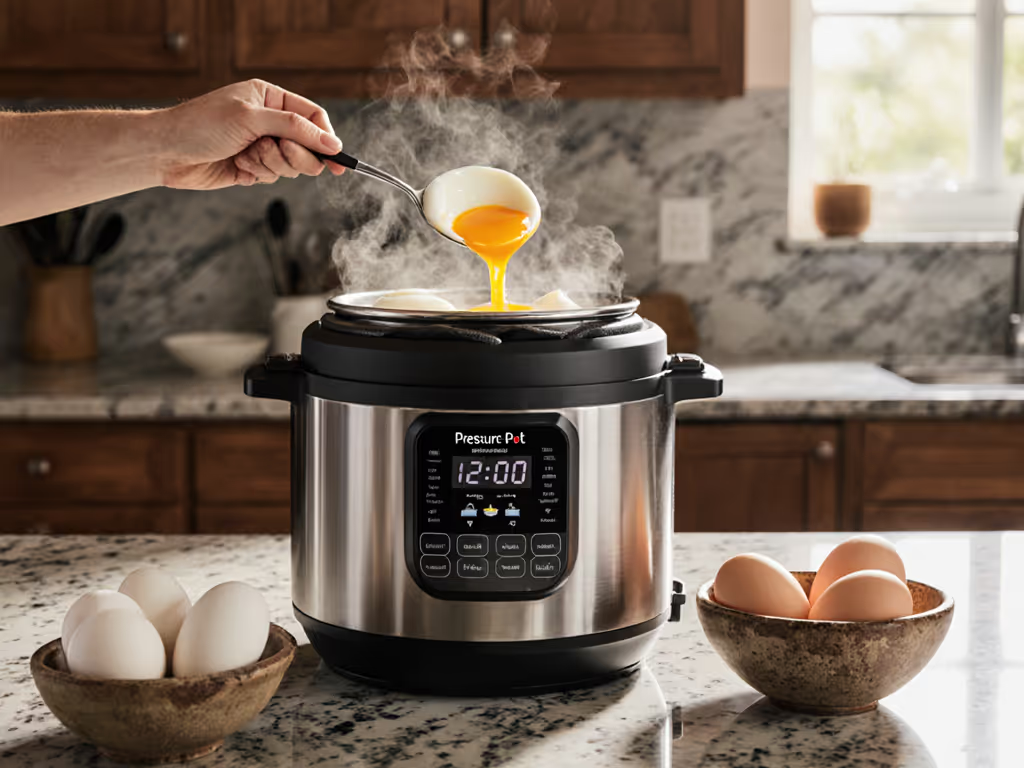
Pressure cookers trap steam, raising internal atmospheric pressure so the boiling point of water climbs to approximately 250°F. At that temperature, food cooks roughly 30 percent faster than with traditional boiling, braising, or steaming. For batch cooking, this efficiency matters: a 6-quart pressure cooker yields 5-6 cups of cooked beans, 4-5 cups of grains, or shredded protein in a single timeboxed session.
From a nutrition perspective, pressure cooking retains more minerals and vitamins than boiled foods because there's less water for nutrients to escape into. Beans and lentils specifically benefit: pressure cooking helps break down antinutrients (compounds like phytic acid and lectins that interfere with mineral absorption), making nutrients more bioavailable to your body.
How Air Fryers Work
Air fryers circulate dry heat to temperatures up to 500°F, creating the Maillard reaction (that browning and crisping that mimics deep frying). Most models preheat in 2-3 minutes and complete recipes in 15-20 minutes total. They're effective across roasting, baking, grilling, toasting, dehydrating, and reheating.
For batch cooking, air fryers excel at finishing work: crisping reheated roasted vegetables, warming frozen fried chicken without sogginess, or refreshing day-old bread. They use 80 percent less oil than traditional frying, making them a legitimate health upgrade.
The Fundamental Incompatibility
You cannot air fry in a pressure cooker, and you cannot pressure-cook something crispy. One relies on liquid and high pressure; the other uses dry circulating heat. They're complementary tools, not redundant ones.
Batch-Cooking Scenarios: Testing Each Appliance in Real Life
To make a defensible choice, map your actual meal-prep workflow against what each appliance delivers.
Scenario 1: Sunday Foundation Cooking (Pressure Cooker's Domain)
Goal: Cook 5-6 foundation portions (beans, grains, shredded protein) in under 2 hours, freezer-ready.
Timeboxed workflow:
- Prep (10 min): Sort/rinse beans; measure grain; organize pot, seal, and internal vessel
- Cook (20-35 min): Pressure-cook beans at high pressure; soak vs. no-soak affects timing For exact times across 15 varieties, see our pressure cooker bean guide.
- Release (10 min): Natural release, then vent; maintains texture and prevents mushiness
- Cool & portion (15 min): Let cool; divide into 5 containers; label with date and reheating method
- Total: 55-70 minutes from raw to freezer; one pot produces 5-6 meals' foundation
Batch and reheat notes: Cooked beans stay creamy when thawed and warmed gently over low heat with liquid. Grains can reheat directly in a pressure cooker or microwave. Shredded chicken holds texture through one freeze-thaw cycle if frozen in airtight portions.
An air fryer cannot perform foundation cooking. It has no mechanism for liquid-based cooking or long-duration steam cooking that transforms dried beans or cooks grains without drying them entirely.
Scenario 2: Weeknight Crisp Finishing (Air Fryer's Domain)
Goal: Reheat frozen portions with texture recovery in under 15 minutes.
Timeboxed workflow:
- Prep (3 min): Remove container from freezer; load basket while still frozen
- Cook (8-10 min): Air fry at 375-400°F; shake basket at 5-minute mark
- Serve (2 min): Plate directly; peak texture at service
- Total: 12-15 minutes from freezer to table; regains crispness with zero sogginess
Batch and reheat notes: Roasted vegetables regain crisp edges; steam reheating (pressure cooker or stovetop) softens them. Fried chicken or breaded fish reheats without the soggy bottom that microwave reheating creates. Portioned, non-stacked containers reheat most evenly.
A pressure cooker cannot replicate this finish. Steam reheating will soften surfaces, never crisp them.
Scenario 3: Texture-Dependent Proteins (Trade-Off Territory)
If your meal prep includes braised or slow-cooked proteins (pulled pork, chicken thighs, beef stew), pressure cookers excel. Pressure cooking braises 30 percent faster than stovetop methods while maintaining tenderness. An air fryer cannot braise; it lacks the liquid environment required. However, an air fryer can crisp the exterior of a reheated pressure-cooked braise if additional browning is needed.
The Storage and Real-Estate Question
For time-pressed meal-preppers in compact kitchens, appliance footprint is a real constraint.
Large-capacity stainless steel pressure cookers (6-8 quart) with dishwasher-safe components enable true batch scaling but occupy approximately 12×12 inches of counter or cabinet space. Air fryers range from compact (8×8 inches) to larger models (14×10 inches). Two separate appliances might demand 18-24 inches of active counter space during prep. If space is tight, compare our space-saving multi-use pressure cookers to see which footprints truly fit small kitchens.
Combo units (pressure cooker + air-fry lid attachment) compress footprint during storage but introduce workflow friction: you must swap lids between modes (not seamless), air-fry attachments typically fit only that brand's pressure-cooker base, and staggered cooking reintroduces the time overhead you hoped to eliminate. For model-by-model results, see our pressure cooker air fryer combo tests.
Combo vs. Separate: The Data-Driven Comparison
When a Combo Unit Makes Sense
- Kitchen is under 100 square feet with minimal counter space
- You pressure-cook occasionally (2-3 times per month), not weekly
- You reheat fewer than three times per week
- Budget cap is under $300
- You're willing to trade workflow efficiency for storage footprint
When Separate Units Make Sense
- You batch-cook every week (pressure cooker) and reheat 3+ times weekly (air fryer)
- Kitchen has dedicated storage for a 6-8 quart stainless steel pressure cooker
- Both appliances run in parallel during Sunday prep, cutting total time by 25-35 percent compared to sequential combo use
- You have a dishwasher or strong preference for low-maintenance cleanup (both separate appliances typically offer more dishwasher-safe parts than combo units)
- One appliance failing doesn't cripple your entire workflow
Cost Reality (Mid-2026 Retail)
| Setup | Pressure Cooker | Air Fryer | Total | Per-Meal Cost (50 meals/year) |
|---|---|---|---|---|
| Quality Separate | $180-220 | $120-180 | $300-400 | $6-8 |
| Mid-Tier Combo | - | - | $250-350 | $5-7 |
| Budget Separate | $100-140 | $80-120 | $180-260 | $3.60-5.20 |
Step-by-Step Decision Framework
Answer these questions in sequence:
Step 1: How Often Do You Pressure-Cook?
Weekly or more → continue to Step 2. Monthly or less → a combo unit may suffice; pressurized cooking is secondary to reheating for you.
Step 2: How Often Do You Reheat Frozen Meals?
3+ times per week → dedicated air fryer pays dividends in both time and texture recovery. 1-2 times per week → oven reheating works; air fryer is a convenience upgrade. Rarely → skip the air fryer for now.
Step 3: How Much Accessible Kitchen Storage Do You Have?
One or more shelves or a lower cabinet dedicated to appliances → separate units fit comfortably. Only counter space → combo unit minimizes footprint; move to Step 4. No dedicated space → combo unit is your only realistic option.
Step 4: What's Your Budget Ceiling?
$300-400+ → buy separate units if Steps 1-3 align. $200-300 → combo unit or budget-tier separate options. Under $200 → start with pressure cooker; add air fryer within 6-12 months as budget allows.
Step 5: Is Parallel Cooking Important?
You often pressure-cook while needing to reheat something else → separate units unlock 25-35 percent time savings. One task at a time is fine → combo unit works.
Templates Turn Pressure Into Predictable Weeknights
Here's what changes when you have the right setup:
With Separate Units (Weekly Meal-Prep Template)
Sunday, 3:00-5:00 PM
- 3:00-3:10: Prep beans and grain; load pressure cooker and air fryer staging area
- 3:10-3:45: Pressure-cook beans (high pressure, 25 min) while prepping protein for second session
- 3:45-3:55: Natural release beans; begin cooking grains in pressure cooker
- 3:55-4:30: While grains cook, shred last week's leftover protein; portion into air-fryer-reheat containers
- 4:30-5:00: Cool, label, and freeze all portions
Result: 5-6 foundation meals + 3-4 reheat-ready portions, zero mid-week cooking required.
With a Combo Unit (Same Timeframe)
Sunday, 3:00-5:15 PM
- 3:00-3:10: Prep beans; load pressure-cooker vessel
- 3:10-3:45: Pressure-cook beans
- 3:45-3:55: Vent; prepare grain
- 3:55-4:30: Pressure-cook grain
- 4:30-4:50: Cool pressure cooker; remove seal; attach air-fry lid
- 4:50-5:05: Air-fry last week's leftovers (or skip if crisping isn't needed this week)
- 5:05-5:15: Cool, label, freeze
Result: Same yields, but workflow includes a ~20-minute sequential pause while you swap modes. Less efficient if both cooking modes are active this week.
Final Verdict: Which Setup Wins
Templates turn pressure into predictable, calm weeknights and full fridges.
For serious batch-preppers (weekly cooking, limited space, tight budget): Buy two separate units: buy a 6-quart stainless steel pressure cooker ($180-200) and a compact air fryer ($120-150). Parallel cooking during Sunday prep cuts total time by up to one-third. The additional $100 upfront pays for itself within 12 weeks of weekly batch sessions through time savings alone. This setup honors the belief that simple systems beat complexity when life gets busy.
For occasional pressure-cookers and frequent reheaters: Invest in a combo unit (~$280-330). You gain storage efficiency and a simpler learning curve. Accept that workflows are sequential; this suits your use frequency.
For beginners or tight budgets under $200: Start with a pressure cooker. It delivers higher ROI in most batch-cooking scenarios. Add an air fryer within 6-12 months once the habit is proven.
Your choice isn't about appliances, it's about matching your setup to your actual rhythm. When the math is right, reheating stops being a decision and starts being a system. Cook once, enjoy twice. That's what both appliances, separately or combined, make possible when you choose wisely.
Related Articles