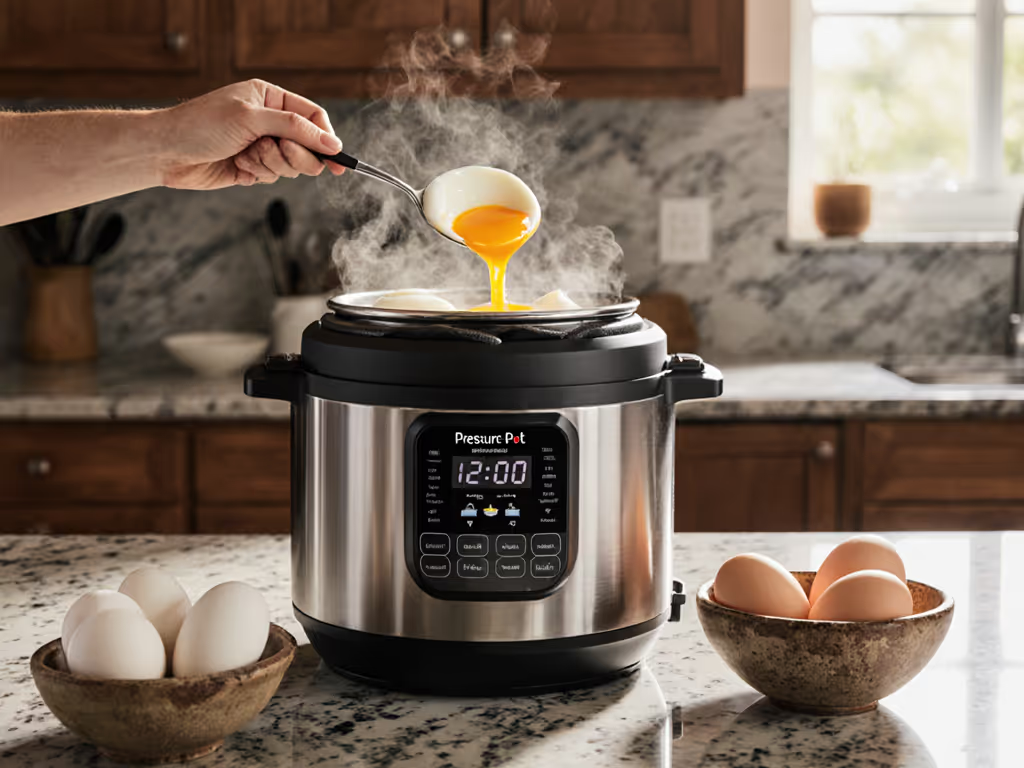
Pressure Cooker Performance: Ethnic Cuisines Tested
By Lina Ortega • 7th Mar
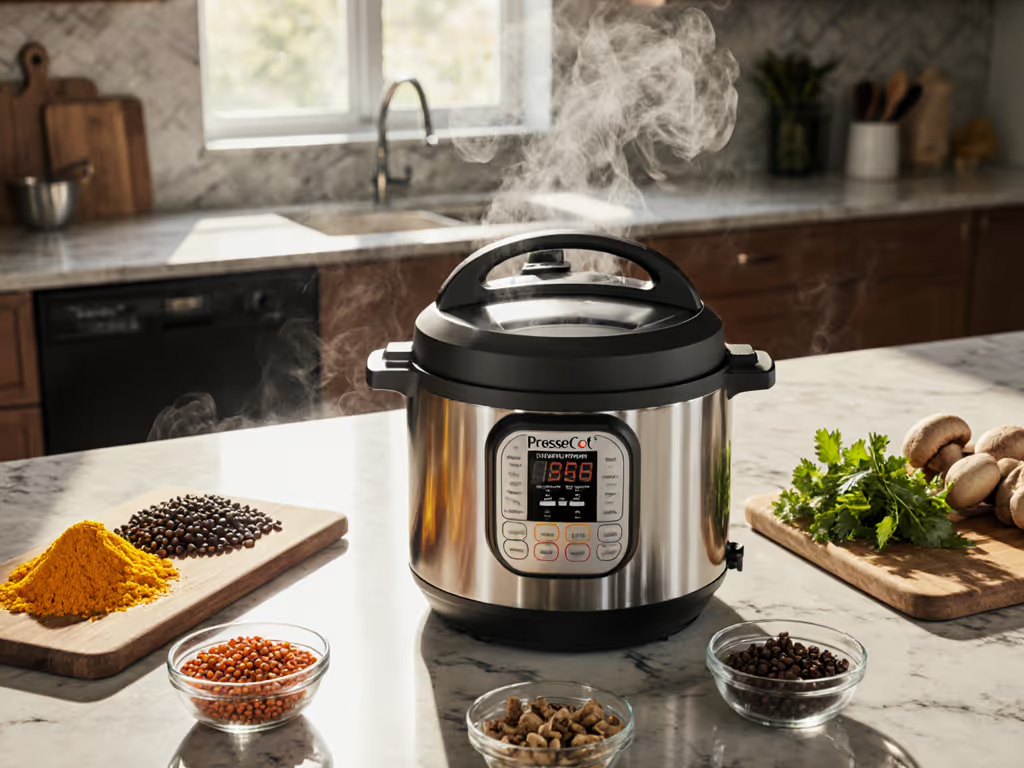
Ethnic pressure cooking isn't a niche technique (it's how billions of home cooks worldwide have cut cooking time in half while deepening flavor and preserving nutrients). But pressure cookers don't perform equally across all cultural cuisines and cooking traditions. What works flawlessly for Indian dals may require adjustment for Mexican braises or Caribbean stews. Understanding how pressure affects different spice profiles, ingredient types, and cooking rhythms is the real payoff.
Why Pressure Cooking Emerged From Ethnic Kitchens, Not Marketing Departments
Pressure cookers became household staples in Indian homes mid-20th century because they solved a practical problem: feeding large families fast without sacrificing authentic taste[1]. The technology wasn't invented for convenience (it was adopted because it worked). Lentils, rajma, chole, and khichdi, everyday staples that once required hours of tending, could now be ready in under 30 minutes[1]. For time-pressed households and working families, this efficiency was survival, not luxury.
The cultural difference matters. In Western kitchens, slow cookers emerged as the alternative (simmering stews for six to eight hours[1]). But that model clashes directly with how Indian pressure cooking techniques rely on heat intensity. Masalas, the backbone of Indian dishes, require high-heat frying in ghee or oil to unlock their flavor[1]. A slow cooker cannot replicate this crucial step, which means curries cooked that way usually taste flat[1]. Pressure cooking, by locking in steam and pushing flavors deep into beans and meats, excels here[1].
What's true for India repeats across other pressure-cooking traditions: the method aligns with how those cuisines actually work, not the other way around.
The Indian Baseline: Why This Matters for Comparison
Indian pressure cooking serves as the testing ground because the tradition is oldest and most refined. By locking in steam and pressure, the pressure cooker pushes spice flavor deep into dals, beans, and meats[1]. Dishes like rajma or mutton curry gain their authentic richness through this technique because the pressure amplifies, not dilutes, bold spice-driven profiles[1].
This is measurable: pressure cookers preserve more nutrients compared to boiling or extended open-pot simmering, because food experiences less exposure to water and heat[6]. For legumes especially, this means tougher varieties soften evenly while retaining the minerals and proteins you're cooking them to get[1].
The rhythm fits household reality. The cultural fabric of Indian kitchens includes the sound of the whistle, a daily reminder of dinner preparation[1]. Meals must be both nutritious and flavorful, and ready quickly, especially for large families or working individuals[1]. Few households can dedicate six hours to a dal when a pressure cooker achieves the same, if not better, results in less than an hour[1].
How Other Ethnic Cuisines Adapt to Pressure Cooking
Mexican and Latinx Bean and Grain Traditions
Mexican bean recipes and Latinx cooking lean heavily on dried legumes, beans are the protein anchor. Pressure cooking reduces preparation friction: beans that once required overnight soaking and 90 minutes of boiling now cook in 15 to 20 minutes under pressure, with or without presoak[3].
The trade-off is liquid management. Mexican moles and slower-simmered bean-based stews traditionally benefit from gentle, prolonged heat to meld spices. Pressure cooking speeds this, but you lose some of the layered flavor development. Workaround: brown your base vegetables and spices in ghee or oil before adding beans and liquid, mimicking the high-heat start that Indian cooking uses. This preserves flavor intensity and prevents dilution.
Asian Broths and Bone-Based Dishes
Asian broth preparation, especially in Chinese and Vietnamese traditions, traditionally simmers bones for 8 to 12 hours to extract collagen and mineral depth. Pressure cooking collapses this to 45 to 60 minutes while retaining most nutritional gains, a proven advantage[1], [6]. The catch: broth color and clarity can suffer if you skip deglazing before pressurizing. The method works, but technique matters.
Stir-fried components, which rank second in preferred cooking methods among East Asians[2], pair well with pressure-cooked base proteins and broths, creating a hybrid workflow: pressure-cooked chicken thighs or seafood stock, then finished with quick stovetop stir-frying of vegetables. This split approach maximizes speed without sacrificing texture or flavor.
Caribbean, African, and South Asian Slow-Braise Traditions
Dishes like nihari or haleem, traditionally cooked overnight, can benefit from a pressure cooker when convenience is desired[1]. Pressure cooking delivers the same tenderization and spice penetration in 2 to 3 hours instead of overnight. The texture stays robust because pressure forces marinades and spices deep into meat fibers rather than relying on prolonged, gentle simmering[1].
However (and this is critical for value), these cuisines also value the ritual and slow development of flavor. Pressure cookers win on speed and nutrition preservation[1], [6], but they're not better for every application, just faster and more energy-efficient[3]. For cuisine-by-cuisine techniques and model tips, dive into our ethnic pressure cooking guide with accurate times and PSI.
The Hidden Costs: What Recipes Don't Tell You
Value shows up in leftovers, not launch-day hype.
Here's where most comparisons fail: they omit preheat time and natural pressure release. A recipe that claims "15 minutes cook time" might take 45 minutes total (preheat 8 to 10 min, cook 15 min, natural release 12 to 15 min). That gap matters when you're meal-prepping or feeding hungry kids.
Another hidden variable: altitude and batch size. If you cook above 3,000 feet, use our high-altitude adjustment guide for precise time and liquid changes. A 6-quart pot's heat dynamics differ from an 8-quart model. Frozen meats require longer cook times. Bean age matters, older dried beans absorb water differently and cook inconsistently. These variables vanish in "set and forget" marketing but reappear as undercooked meals or wasted ingredients.
For ethnic cuisines especially, liquid minimums create tension. Most pressure cookers require 1 to 2 cups of liquid to generate steam safely[3]. But Mexican mole or Indian gravies need thick, concentrated sauces. Solution: use the natural release method to allow more liquid to evaporate and reduce afterward on the stovetop (a two-step approach that costs extra time and energy).
The Safety and Repairability Checklist
Pressure cookers inspire anxiety about sealing failures, foaming clogs, and steam burns. This anxiety is justified only if you skip the pre-cook workflow. Build this into your system:
- Check the sealing ring (gasket) for cracks or warping each use. Replace annually or if meals taste flat (indicates weak seal).
- Never exceed the maximum fill line (usually 2/3 capacity for starchy foods, 3/4 for liquids).
- Include adequate liquid: most recipes call for at least 1 cup, up to 2 cups depending on cook time.
- For electric models, understand what "BURN" errors mean (usually insufficient liquid or contact with heating element). Clear the pot, add liquid, and restart.
- Use natural release for proteins; quick release for vegetables or grains. Not sure which to use? See our natural vs quick release guide for texture-perfect results. Recipes specify, so follow them.
- Let pressure drop completely before removing the lid manually, never force it.
For budget-conscious cooks, repairability is the pivot point. Stovetop pressure cookers (simple metal pots with weighted valves) last 20 to 30 years with only gasket and release-valve replacements (each $10–20). Electric models have circuit boards and heating elements that fail after 5 to 8 years[1]. If you aim to buy once, service long, a stovetop model with available replacement parts beats a fancy multi-function appliance with limited parts supply.
After a glossy multicooker with four cooking modes failed a week after warranty expired, I calculated the true cost: replacement gasket ($18), sealed pot ($35), shipping ($12), plus replacement of the failed unit (versus selling at loss). Versus a 6-quart stovetop Mirro ($45 new, lasts 15 years, gaskets available everywhere for $8 each). The math was blunt: repairable beats fancy modes.
Ethnic Pressure Cooking in Real Kitchens: What Data Shows
When survey respondents ranked preferred cooking methods by ethnicity, all groups preferred grilling/roasting/broiling as first choice[2]. But this reflects restaurant and occasional-meal preferences, not daily household cooking. For daily legumes, broths, and braises (the meals that feed families most nights), pressure cooking dominates in South Asian, Latinx, Caribbean, and Eastern European households[1], [2].
The second-ranked preference varied: deep frying ranked second among Whites and Blacks, while stir-frying ranked second among Hispanics and East Asians[2]. Notably, none of these exclude pressure cooking as a utility step, it's the foundation that enables the finish. Pressure-cooked beans feed the taco. Pressure-cooked broth starts the stir-fry.
Building Your Ethnic Pressure-Cooking Playbook
Start with staples native to the cuisine you cook most: Indian dals, Mexican beans, Asian broths, Caribbean stews. For each, write down:
- Standard cook time: 15 min (beans), 8 min (dals), 45 min (broth).
- Liquid ratio: 1:1 (most), 2:1 for older beans, minimal for braises.
- Pre-cook steps: which spices fry in oil first, which go in with liquid.
- Release method: natural for meat, quick for vegetables.
- Total time: preheat + cook + release + finishing steps.
- Batch size and storage: how many meals this yields, how long it freezes.
Test one recipe three times. Adjust for your altitude, your pot size, your stove's heat output. Write it down. This becomes your reference, the repeatable system that anyone in your household can follow.
The Actionable Next Step
Choose one ethnic cuisine you cook weekly. Select one staple dish (dal, beans, broth, stew). Cook it via pressure cooker once, timing each phase: preheat, cook, release, finish. Total the time. Then cook the same dish via your old method (or your family's traditional method). Compare time, flavor, and nutritional density (which research confirms, pressure cooking edges out[6]).
If pressure cooking wins on time and nutrition, build it into your weekly batch-prep. If flavor lags, modify the pre-cook or finishing step (add spice-fried base, reduce liquid afterward). Document what works. Ignore hype; trust the math.
Value shows up when you repeat this 20 times and save 15 hours of cooking over two months. That's when pressure cooking stops being a gadget and becomes infrastructure. Buy once, service long (whether that's a durable stovetop model or a reliable electric unit), and let the repeatability do the work.
Related Articles