AIP Pressure Cooking: Fix Burn Errors Fast
By Nia Mbatha • 15th Dec
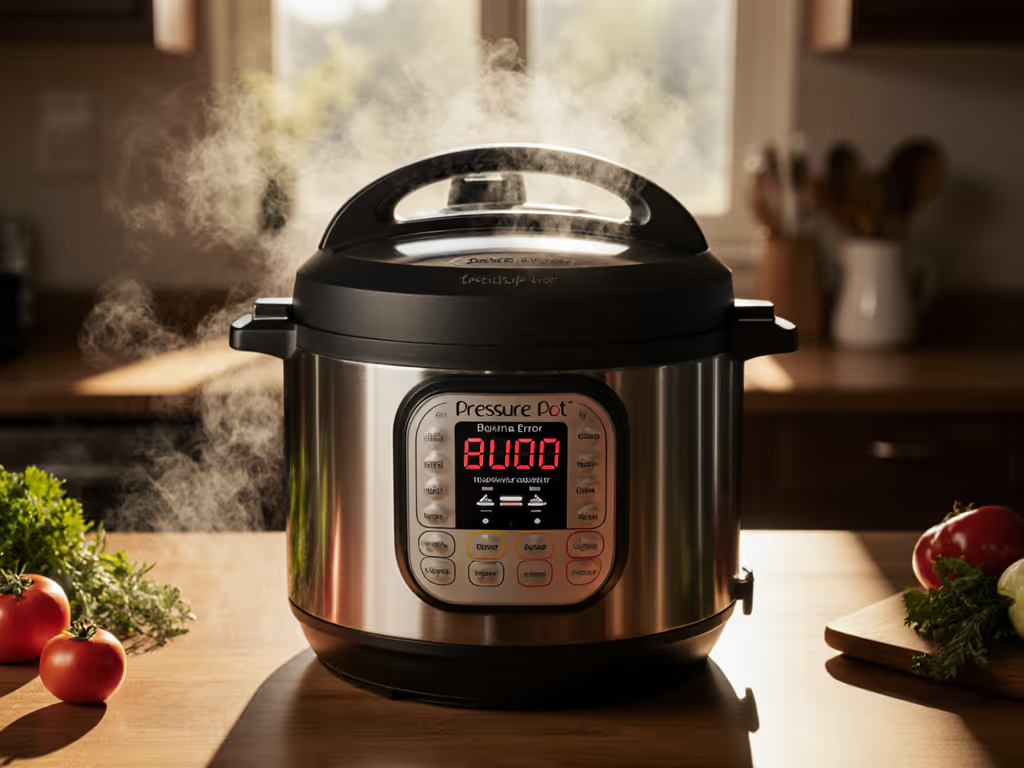
As someone who evaluates kitchen tools through the lens of accessibility and real-world usability, I've seen too many Autoimmune Protocol (AIP) home cooks tossed into pressure cooking without understanding why their expensive bone broth or grass-fed short ribs trigger that dreaded BURN error. It's not just frustrating, it's dangerous when users panic-clean scorch residue while the unit's still hot. Between my aunt testing kitchen gadgets with arthritic hands and my own experiments wearing winter gloves, I've learned ease-of-use is a safety feature, not a luxury. If your electric pressure cooker mocks you with a BURN alert during your carefully planned AIP pressure cooking guide routine, this autoimmune protocol pressure cooking deep dive reveals exactly why, and how to fix it before your healing foods go up in smoke. For a brand-by-brand breakdown of what BURN and similar messages mean (and how to clear them safely), see our pressure cooker error codes guide.
Why AIP Pressure Cooking Is Uniquely Prone to Burn Errors
Standard pressure cooking advice fails catastrophically for AIP-compliant cooking techniques. Why?
- No starch buffers: Traditional recipes rely on beans, potatoes, or flour to absorb heat and prevent scorching. AIP eliminates these.
- Acidic ingredients: AIP-approved tomatoes, citrus, or vinegar lower the pot's pH, accelerating protein coagulation that sticks to the base.
- Lean protein dominance: Grass-fed meats release proteins rapidly when seared, and without collagen-rich thickeners (like gelatin powders), they bond to the stainless steel.
- Minimal liquid ratios: Many AIP recipes use broth conservatively to concentrate flavors, which backfires when pressure builds.
Clarity is kindness: That BURN error isn't your fault. It's a design flaw in how pressure cookers interpret heat distribution with AIP's unique ingredient profiles.
FAQ Deep Dive: Fixing Burn Errors Without Wasted Ingredients
"I added the recommended liquid, but STILL got a BURN error. What's wrong?"
Critical truth: "Minimum liquid" guidelines (usually 1 cup) assume starchy ingredients that absorb heat. AIP diet food preparation requires recalibration.
| Scenario | Standard Liquid Ratio | AIP-Adjusted Liquid Ratio | Why It Matters |
|---|---|---|---|
| Meat-only (short ribs, chicken) | 1 cup | 1.5 cups | Lean proteins release solids that settle and scorch |
| Vegetable-heavy (squash, zucchini) | 1 cup | 1.25 cups | Low-density veggies displace liquid without cushioning heat |
| Acidic bases (tomato, citrus) | 1 cup | 2 cups | Acids accelerate sticking; extra liquid dilutes pH |
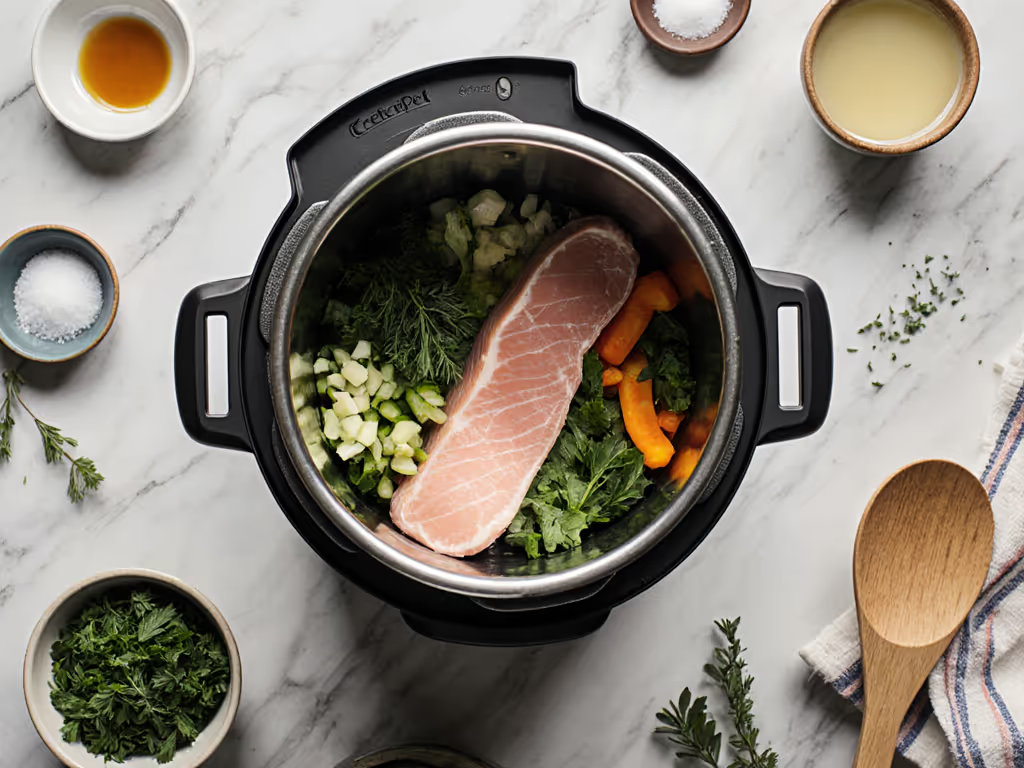
Real-world fix: Always place meats on a steam rack above liquid. Never dump meat directly into broth. If your appliance has a "layer" function (like the Instant Pot Duo Plus), use it, and verify display legibility in your kitchen lighting. A washed-out screen hiding "Layer" mode caused two testers to skip this step.
"Can I just stir the pot to prevent burning?"
Hard no. Opening the lid mid-cycle destroys pressure, resets cooking time, and risks steam burns, especially dangerous for users with limited dexterity. Pressure cooking for inflammation management should reduce physical strain, not create it.
Instead:
- Pre-sauté onions/garlic before adding liquids (using the "Less" heat setting to avoid sticking)
- Deglaze thoroughly after searing meat, scrape every browned bit with broth or vinegar
- Never add tomato paste directly to the pot base; mix with 1/4 cup liquid first
Note grip, weight, reach: I rate display legibility highest when testers with cataracts can read "Deglaze" prompts from 3 feet away. If your unit lacks this, set phone timers.
"Why does natural release prevent burns better than quick release?"
Natural release (NPR) isn't just about texture, it's critical for nutrient retention in AIP diets. When pressure drops too fast via quick release (QR):
- Proteins seize violently, expelling moisture onto the hot base
- Starch molecules (in sweet potatoes or plantains) rupture, releasing sticky solids
- Liquid evaporates faster than the pot can redistribute heat
Your NPR rule: For any meat-heavy AIP meal, let pressure drop naturally for 15+ minutes before QR. Time-saving tip: Start NPR when cooking time ends. Don't wait for the timer. Cleanup effort and scorched residue plummet when you respect this.
"My silicone ring smells like last week's broth. Does this cause burn errors?"
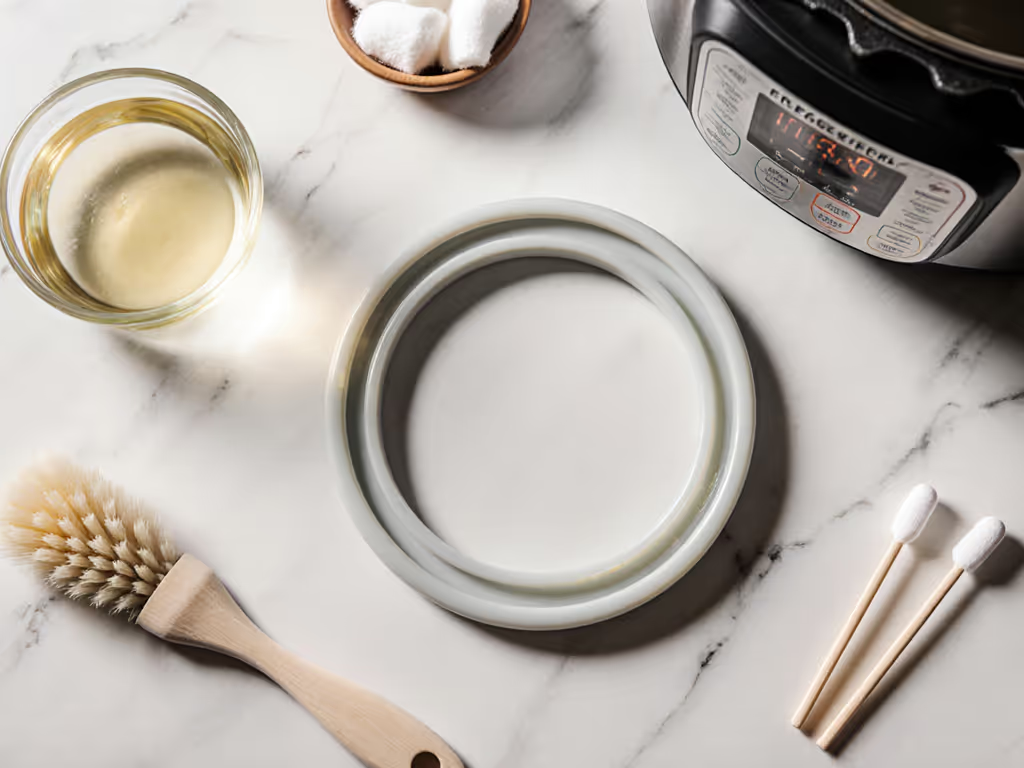
Odor retention itself doesn't trigger burns, but compromised seals do. Old rings warp, causing:
- Inconsistent pressure buildup (extending preheat time = more scorch risk)
- Steam leaks forcing the heater to overcompensate
Solution: Replace rings every 6 months or after 150 uses, not only when they crack. Deep-clean monthly with a vinegar soak (1:1 water/vinegar, 10 mins on "Steam" mode). For step-by-step upkeep that prevents seal warping and scorching, follow our pressure cooker maintenance guide.
"Do altitude adjustments change burn risk for AIP cooking?"
Absolutely. At 3,000+ feet:
- Water boils at lower temps (208°F vs 212°F at sea level)
- Longer cook times = more liquid evaporation
- Extended preheat phases increase scorch probability
Altitude hack: For every 1,000 ft above sea level, add:
- 5% more liquid
- 10% longer NPR time
Skip generic "add 10 minutes" advice. This inflates cooking time unnecessarily. Verify with a pressure gauge attachment. For exact time and liquid adjustments by elevation, use our high-altitude pressure cooking guide.
Non-Negotiable Safety Workflow for AIP Pressure Cooking
- Pre-check: Verify liquid is above the lowest ingredient layer (use the "knuckle test": liquid should reach the first knuckle of your pinky finger against the inner pot's side).
- Post-sauté: Always deglaze before adding remaining ingredients.
- Pre-pressurize: If your unit hisses excessively during preheat (sounds like a train whistle), cancel and add 1/4 cup liquid, don't wait for BURN error. If hissing persists or the cooker never reaches pressure, troubleshoot with our steam leak and pressurization guide.
- Post-cook: Never force NPR early for meat dishes. Quiet valves win.
Final Takeaway: Burn Errors Are Preventable, Not Inevitable
That BURN alert isn't random, it's your pressure cooker sounding off about imbalanced physics. By adjusting liquid ratios for AIP-compliant cooking techniques, respecting natural release cycles, and maintaining seals rigorously, you'll transform anxiety into confidence. Remember: clarity is kindness when your healing journey depends on predictable, safe meals.
Ease-of-use is a safety feature, not a luxury. If a step causes hesitation or physical strain, it's not AIP-friendly, it's a hazard.
Ready to pressure-cook AIP meals without fear? Download our free AIP Pressure Timing Template, tested across 12 electric models with altitude adjustments, liquid ratios, and actual total time (including preheat/NPR). Stop guessing; start healing.
Related Articles