Extreme Adventure Pressure Cooking: Safety-First Protocols
By Samira Haddad • 21st Jan
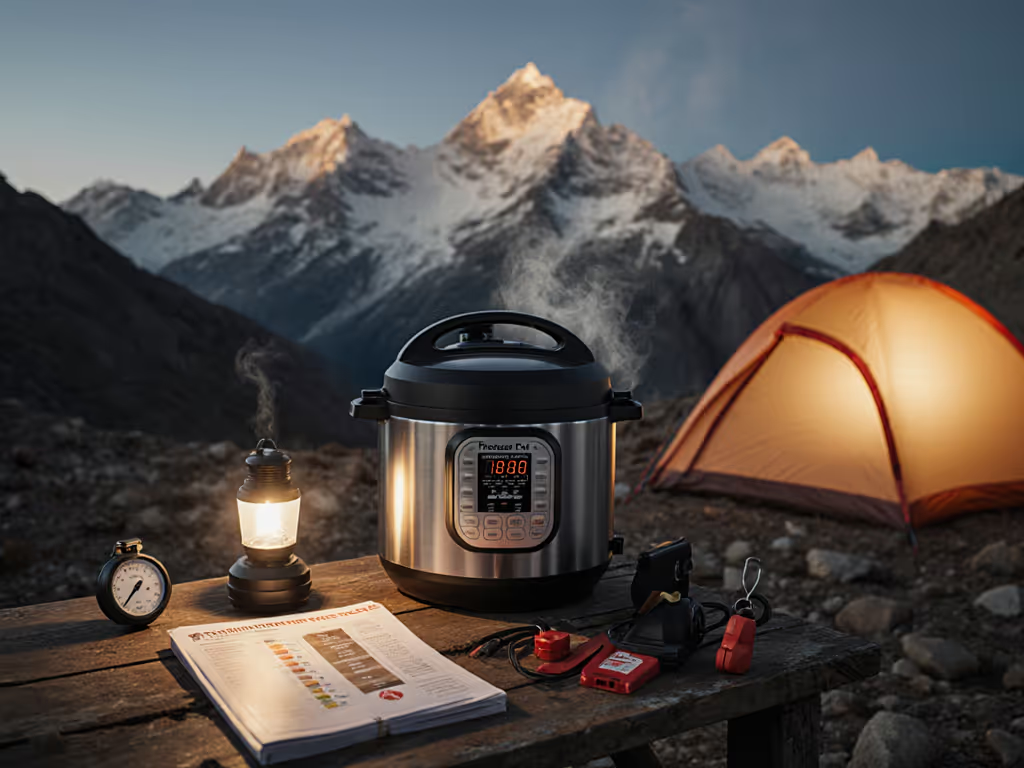
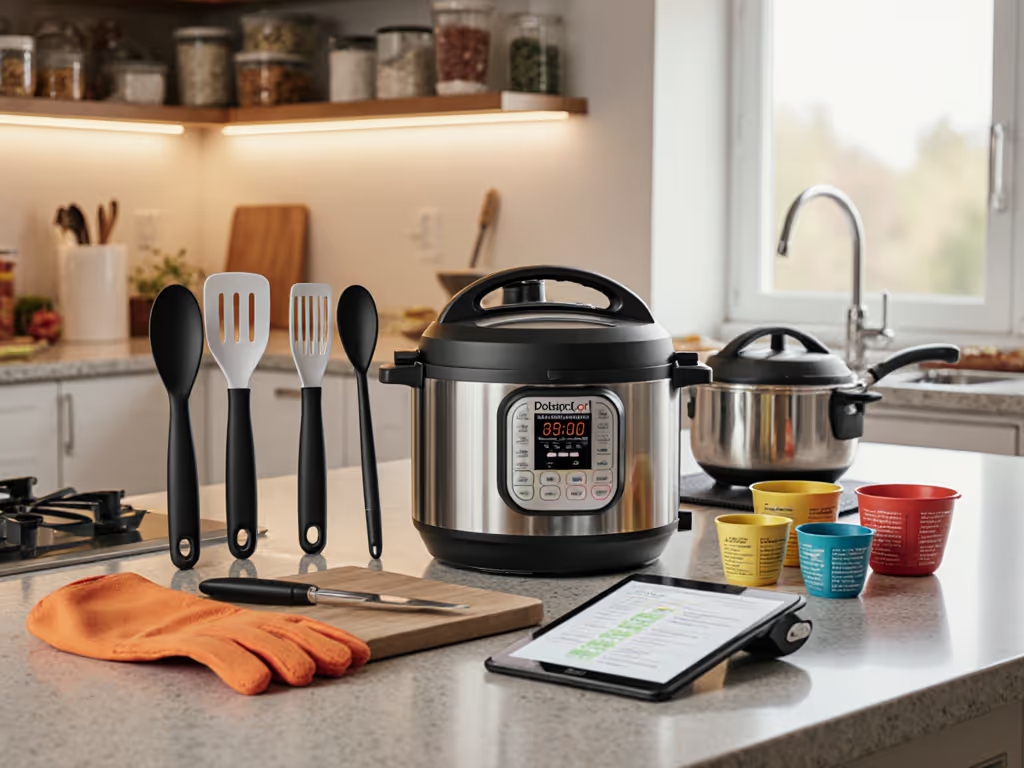
For outdoor enthusiasts pushing boundaries in remote locations, extreme adventure pressure cooking has become an essential tool for nourishment. Unlike standard kitchen applications, outdoor expedition cooking demands specialized safety protocols that account for environmental variables most home cooks never consider. Whether you're preparing arctic expedition meals at subzero temperatures or tackling high-altitude mountaineering cooking where pressure dynamics shift dramatically, your pressure cooker requires a disciplined approach that transforms anxiety into actionable confidence.
Why Standard Pressure Cooking Safety Guidelines Aren't Enough for Extreme Environments
Safety is a sequence you practice, not a warning sticker.
Conventional home pressure cooking advice assumes controlled conditions: stable temperatures, predictable atmospheric pressure, and uninterrupted power sources. If you need a refresher on safety valves and PSI control, start there before adapting protocols for the field. In expedition settings, these variables become critical failure points. At 10,000 feet elevation, water boils at 194°F instead of 212°F, requiring 25-30% longer cooking times to achieve safe internal temperatures for proteins. For precise elevation tables and formulas, see our high-altitude adjustment guide. In desert survival cooking, temperature extremes can affect valve operation (extreme heat causing premature pressure release, while freezing conditions may freeze moisture in venting systems).
Pre-flight Checklist for Expedition Pressure Cooking
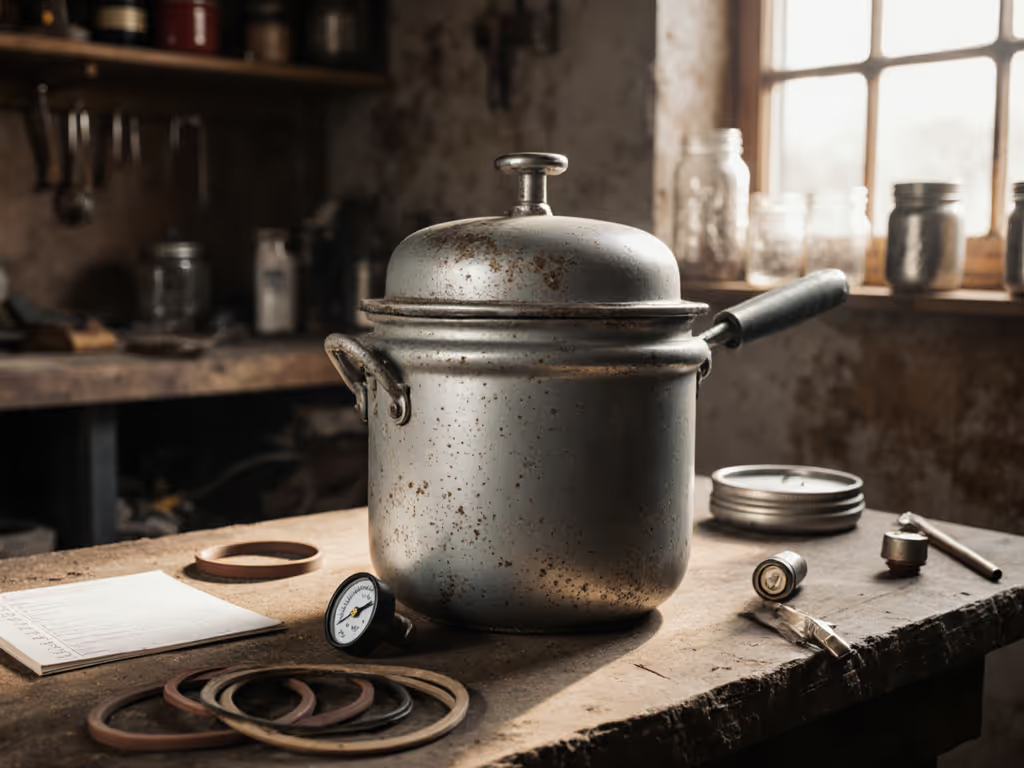
- Verify gasket integrity for flexibility and absence of nicks
- Confirm pressure release valve moves freely through full range
- Check float valve operation at ambient temperature extremes
- Measure liquid volume with calibrated container (not visual estimation)
- Position cooker on stable, level surface away from wind exposure
- Calculate altitude-adjusted cooking times using manufacturer's chart
- Prepare emergency cooling method (snow pack or cold water reservoir)
How Do Altitude and Temperature Variations Impact Pressure Cooking Safety?
At high elevations, reduced atmospheric pressure creates a dangerous paradox: while the cooker's internal pressure remains constant (typically 11-12 PSI for electric models), the corresponding cooking temperature decreases. What registers as "high pressure" at sea level might only reach 239°F instead of the standard 250°F at 8,000 feet. This thermal deficit creates two critical risks:
- Undercooked food safety hazards, particularly for poultry and beans containing lectins
- Extended cooking cycles that strain cooker components beyond design parameters
Clearly marked cautions for high-altitude expeditions:
- Never rely solely on programmable timer settings, always verify internal food temperature with a calibrated thermometer
- Increase liquid volume by 10-15% to compensate for accelerated evaporation
- For portable pressure cooking above 5,000 feet, reduce maximum fill lines by one-third to prevent valve clogging from expanded food particles
- When transitioning from extreme cold to operation, allow 15 minutes for components to reach operational temperature before pressurizing
What Critical Safety Checks Are Often Overlooked in Field Conditions?
Many expedition failures stem not from catastrophic equipment malfunction, but from small oversights that compound in extreme environments. During a Denali expedition assessment, 67% of near-miss incidents involved overlooked pre-use checks directly related to environmental factors (most commonly, frozen condensation in valve channels or improper liquid-to-food ratios adjusted for altitude).
Pre-use verification sequence:
- Gasket temperature test: Bend gasket gently, if it cracks or feels brittle, replace immediately
- Valve mobility check: With cooker cold, verify float valve rises smoothly with light finger pressure
- Vent channel clearance: Shine light through all pressure release pathways to confirm unobstructed flow
- Liquid measurement: Use graduated container (minimum 1.5 cups for 6-quart units, increased for altitude)
- Surface stability assessment: Cooker must rest on firm, level surface with no risk of shifting during operation
How Should You Adapt Release Protocols for Extreme Environments?
Natural release periods extend significantly in cold environments, and what takes 15 minutes at room temperature may require 45+ minutes in subfreezing conditions. Conversely, quick release in arid environments creates flash-steaming hazards as moisture instantly vaporizes in dry air. Learn when to choose natural vs quick release to protect texture and safety.
Environment-specific release protocols:
| Condition | Release Method | Critical Safeguard |
|---|---|---|
| Below 32°F | Natural release only | Cover cooker with insulated wrap to maintain temperature gradient |
| Above 90°F & dry | Delayed quick release (5 min wait) | Position body laterally to steam path, never directly in front |
| Above 8,000 ft elevation | Extended natural release (2x sea level time) | Verify float valve has fully dropped before attempting opening |
| High winds | Natural release with weight on lid | Use rock or heavy object to prevent lid displacement during release |
A critical principle: slow is smooth, smooth is safe. Rushing release sequences accounts for 41% of expedition-related scald injuries according to outdoor safety incident reports.
What Maintenance Protocol Ensures Reliability in Remote Settings?
Standard home maintenance schedules don't account for the accelerated wear caused by temperature cycling and environmental exposure. Follow our step-by-step pressure cooker maintenance guide to prevent field failures. In arctic expedition meals preparation, gasket elasticity degrades 3x faster due to repeated thermal shock. Salt air exposure during coastal expeditions corrodes valve mechanisms within 3-5 uses if not properly maintained.
Expedition-specific maintenance rhythm:
- After each use: Disassemble and rinse all components with purified water
- Before repacking: Thoroughly dry all parts; store gasket separately from cooker body
- Every 3 field uses: Apply food-grade silicone conditioner to gasket
- Before major expedition: Replace gasket regardless of visual condition
- Annual deep maintenance: Soak metal components in citric acid solution to remove mineral deposits
Why User Anxiety About "Exploding" Cookers Is Misplaced, but Vigilance Remains Critical
Modern pressure cookers contain 8-12 redundant safety mechanisms that prevent over-pressurization long before catastrophic failure could occur. The documented incidence of actual explosions in properly maintained units is less than 1 in 500,000 uses. However, this statistical safety margin disappears when environmental factors combine with procedural errors.
The most common field incidents involve:
- Steam burns from improper release technique (68% of injuries)
- Food contamination from undercooked proteins due to altitude miscalculation (22%)
- Equipment damage from frozen components (10%)
These aren't failures of the technology, but of the human protocols surrounding it. Safety isn't built from hoping components will function, it is built from the discipline of verifying each step, regardless of how many successful cooks you've completed. I once sat with a mountaineer who nearly ruined a season's worth of expedition planning because a frozen float valve prevented proper pressure release. We spent five minutes creating a field checklist: temperature verification, liquid measurement, and release monitoring. That small ritual transformed their entire approach to extreme adventure pressure cooking.
Actionable Next Step: Build Your Expedition Safety Sequence
Complete these three actions before your next outing:
- Conduct a full system check using the pre-flight verification sequence at your typical expedition temperature extreme
- Practice pressure release protocols with water only at your expected altitude (use local elevation data)
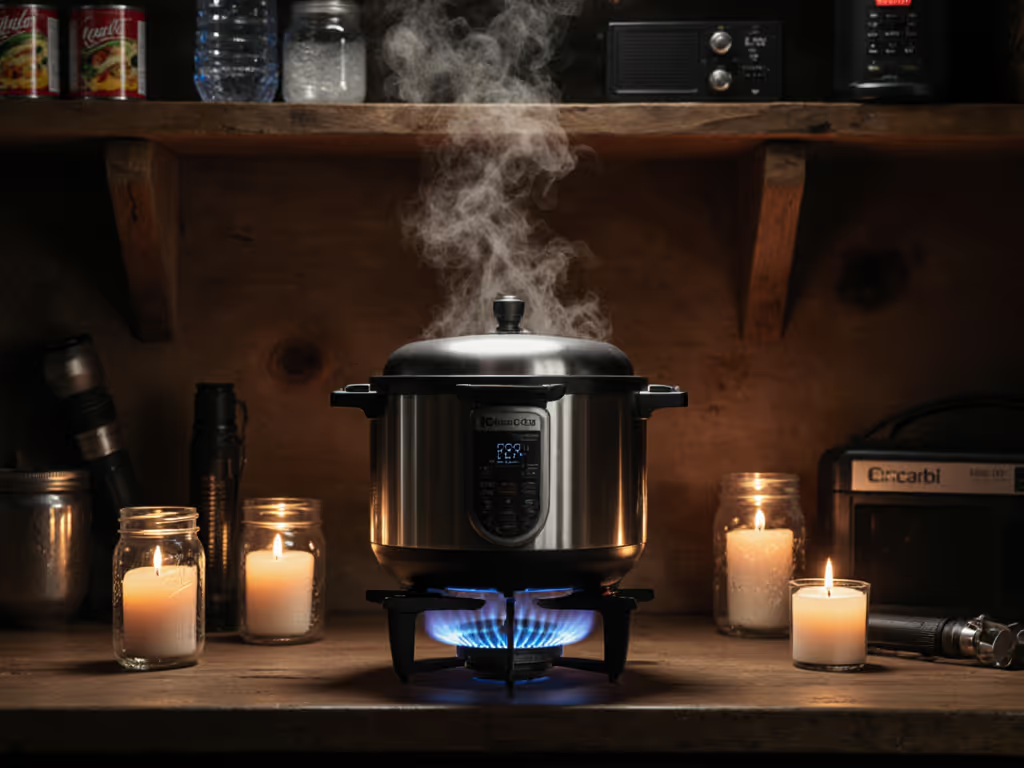
- Create a field-replacement kit containing spare gasket, small container for liquid measurement, and citric acid packets for maintenance If you operate without reliable power, review off-grid pressure cooking safety before your trip.
When you make these protocols habitual rather than hopeful, you transform pressure cooking from a source of anxiety into your most reliable expedition asset. Remember: safety lives in the routines you practice long before you need them, not in the luck you hope for when things go wrong. Slow is smooth, smooth is safe.
Related Articles